Parenting by Example: How Confidence is Modeled, Not Taught

At this stage of my career, I primarily work with young adults and adults navigating anxiety, depression, and self-esteem. But not that long ago, I was the young, cool therapist—the one parents wanted their ADHD or ODD sons to connect with.

I still love child development. I still enjoy working with kids and adolescents.

But nothing grounds you quite like having an 11-year-old daughter and a 13-year-old stepdaughter.

I am no longer the young, cool therapist. And almost certainly not the cool guy at home. (The eye rolls out number the laughs nowadays)

And honestly? That’s probably for the best.

When Being “Cool” Stops Being the Goal

Not that I’m trying to be cool to middle schoolers. Insert generic dad joke about not having rizz. (Listen, I’m cool enough to know not to even attempt it.)

A man wearing a red cap and skateboard, dressed in casual attire, greets a group of young people with the phrase 'How do you do, fellow kids?'

What’s shifted isn’t my sense of humor—it’s my focus. Somewhere in the second decade of parenting, the question quietly changes. It’s no longer about telling them they’re awesome little achievers that can do anything they put their little minds to.

It becomes about showing them what it looks like to be proud of yourself in life.

Am I someone I’d want to become?

Am I leading by example?

The First Decade: Building Their Confidence and life. 

During the first decade of parenting, I spent a lot of energy cultivating my daughter’s self-esteem. I encouraged her and celebrated her achievements. I made sure she knew she was capable and worthy.

Lately?

She gives significantly fewer shits about what I think.

She rolls her eyes and sarcastically asks “is this another life lesson?!” She complains when I encourage her to be proud of herself. I get it. It’s dorky now. It’s parent stuff.

The Second Decade: Modeling Living a confident enjoyable life. 

What actually needs my attention now isn’t coaching her confidence—but modeling it.

That means being proud of myself.

Not “cool” (that ship sailed when I started making comments worthy of Progressive Insurance commercials).

But grounded. Intentional. Honest.

Sometimes I catch myself wondering:

Would my daughter want to live a life like mine?

Two individuals running on treadmills in a gym with large windows showing a view of the outdoors.

Leading by Example Isn’t About Control—It’s About Consistency

I hope my daughter continues to be her own independent, creative self. (Though, good or bad, she has many of my idiosyncrasies.)

My role now feels less about directing her growth and more about living in a way that demonstrates self-respect.

One of the best things we can do for the people we love is take care of ourselves. We are not do it performatively, not perfectly, but consistently.

Good parenting isn’t just being present and attentive.

It’s being able to stand behind the life you’re living.

That includes being proud of your own:

  1. Daily habits
  2. Physical health and movement
  3. Mental health and emotional regulation
  4. Relationships
  5. Interests, hobbies, and passions

Kids notice what we do far more than what we say.

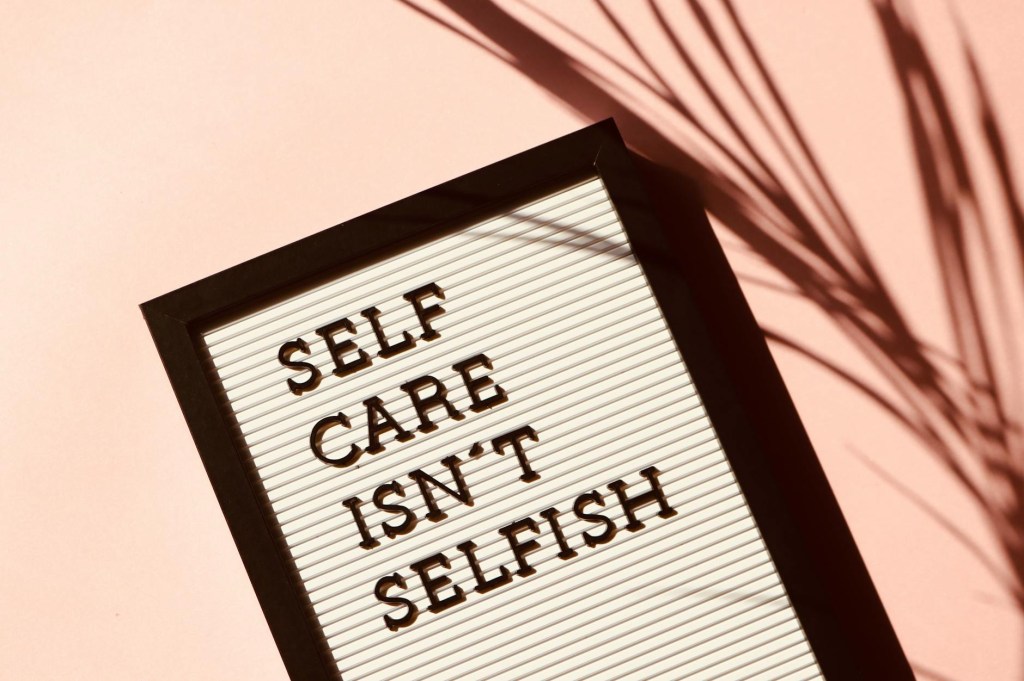
A framed sign with the text 'SELF CARE ISN'T SELFISH' displayed against a pink background, accompanied by a shadow from a plant.

Modeling Matters More Than Motivating

Recently, our girls did wall sits for an absurd amount of time—because I was doing a wall-sit challenge at my gym.

No lecture required.

No motivational speech.

Just modeling.

My daughter has also been leaning into humor lately. (I like to think we’ve made her life just stressful enough to have good material, yet comfortable enough to feel secure being silly.)

She told me a story from school that stuck with me.

She wanted to leave school early. She Googled me, pulled up my website, and showed her friends my profile—where my session fees are listed.

She announced:

“Guys, I have to come up with at least a hundred dollars for my dad to come get me.”

I was proud—not because she was “flexing,” but because she was playful, confident, and comfortable sharing this tibdit with her classmates ( and now with me). She proceeded to ask her classmates if she looked like me. (She did not need confirmation—unfortunately- poor girl looks exactly like her dad.)

What that moment told me was this:

She wasn’t embarrassed by me.

She wasn’t hiding me.

She was proud.

A man in sunglasses stands with a water bottle and a towel over his shoulder, watching two children play soccer in a sunny park.

Being Someone Your Kids Can Be Proud Of Starts With You

I know 11 is still young. The next decade will likely involve plenty of eye-rolling, boundary-testing, and days where I unequivocally take the L.

But I want to give myself the best chance possible—not by being perfect, but by being someone I respect.

Because when I’m proud of how I live,

when I show up for myself,

when I take care of my mental and physical health—

I’m not just teaching her confidence.

I’m showing her what it looks like.

And hopefully, one day, she’ll be damn proud of herself too.

Realistic Goal Setting: Why Most New Year’s Resolutions Fail (and What Actually Works)

Every January, many people set New Year’s resolutions with the hope that this will be the year they finally become more disciplined, motivated, organized, emotionally regulated, physically healthier, and financially stable.

By February, most of those goals have stalled or been abandoned.

This is not because people are lazy or lack willpower. More often, resolutions fail because goal-setting is approached from an unrealistic psychological framework.

Understanding why New Year’s resolutions fail—and how behavior change actually works—can help create more sustainable and mentally healthy goals.

The Motivation Myth in Goal Setting

One of the most common beliefs behind failed resolutions is:

“I need to be motivated to start.”

Although this belief feels intuitive, it is psychologically inaccurate. From a Rational Emotive Behavior Therapy (REBT) perspective, this represents an unrealistic expectation that often leads to avoidance, frustration, and self-criticism.

Motivation is not a prerequisite for action. In most cases, motivation follows behavior, not the other way around. Research in behavioral psychology consistently shows that action precedes emotional momentum.

Waiting to feel motivated before starting is similar to waiting for confidence before engaging in the behavior that builds confidence. The sequence is reversed.

Why Unrealistic Goals Lead to Burnout

In addition to relying on motivation, many people construct goals that are overly broad or rigid:

“I’m going to completely change my life.” “I’m never doing that again.” “I’m all in or nothing.”

These all-or-nothing approaches are common cognitive distortions. While they may feel decisive, they often lead to burnout and reinforce the belief that setbacks reflect personal failure.

Sustainable behavior change tends to be incremental, repetitive, and unremarkable.

One habit.

Made manageable.

Repeated imperfectly.

This is not a lack of ambition—it is a more accurate model of how long-term change occurs.

The Problem with “New Year, New Me”

Popular self-improvement narratives often suggest that meaningful change requires becoming a different person. Clinically, this framing can undermine self-efficacy by implying that the current self is insufficient to initiate growth.

From a therapeutic perspective, progress does not require reinvention. It requires consistent effort from the existing self.

Behavior change is not an identity overhaul. It is a practice.

How Self-Defeating Thoughts Sabotage Progress

Before people disengage behaviorally, they often disengage cognitively. Self-defeating beliefs typically precede avoidance.

Common examples include:

“I need to feel motivated to start.” “I should be further along by now.” “If I can’t do it perfectly, what’s the point?”

Although these thoughts may feel true, they tend to increase psychological pressure, reduce distress tolerance, and make quitting more likely.

A Rational Alternative to Motivation-Based Change

REBT emphasizes replacing unhelpful beliefs with rational, flexible alternatives that support persistence:

“I do not need to feel motivated to act.” “I can tolerate discomfort.” “I can improve one small thing at a time.” “Effort itself has value.”

This is not positive thinking or affirmation-based work. It is cognitive restructuring grounded in behavioral principles.

Progress is built through daily effort and consistency, especially when motivation is low.

Practical, Realistic Goal Setting Strategies

For individuals seeking healthier and more effective goal setting, the following principles are supported by behavioral psychology and clinical practice:

Focus on behaviors rather than outcomes Choose one habit instead of multiple simultaneous changes Expect discomfort and plan for it rather than avoiding it Measure success by follow-through, not intensity

Less pressure.

More discipline.

Smaller steps.

This approach does not lower standards—it places them where they are psychologically sustainable.

Keywords targeted: realistic goal setting, New Year’s resolutions and mental health, motivation and behavior change, REBT therapy, behavior change psychology, self-discipline vs motivation

Home for the Holidays: Handling Family Stress

The holidays have a funny way of amplifying everything—joy, nostalgia, expectations, and yes… family stress. Old roles resurface, familiar buttons get pushed (often expertly), and suddenly you’re reacting like you’re 14 again instead of the well-adjusted adult you worked so hard to be.

The goal isn’t to eliminate stress or conflict entirely (good luck with that!). It’s to manage it in a way that protects your energy, your values, and your sanity—while still allowing for connection, meaning, and maybe even a little fun.

Here are a few grounded (and realistic) ways to get through it:

1. Set boundaries for yourself

Have a game plan for how you want things to go. Boundaries aren’t about controlling other people. They’re about deciding what you will participate in.

This can look like:

  • Having a firm plan for how long you’ll stay somewhere
  • Deciding in advance, “If things escalate or get draining, I’m leaving”
  • Giving yourself permission to step away without over-explaining

Instead of trying to convince others to behave differently, you’re setting parameters for your own behavior. This shifts boundaries from confrontational to self-protective—and that’s usually far more effective.

2. Some conflict is okay (even during the holidays)

The holidays aren’t a conflict-free zone, and they don’t need to be.

People need feedback. If someone is pressuring you, ignoring your limits, or resorting to guilt, it’s reasonable to name what’s happening. You don’t have to shut down, explode, or silently endure it.

Sometimes the most regulated response sounds like:

  • “I’m not going to participate in this conversation.”
  • “That feels like guilt, and I’m opting out.”
  • “I’m open to talking, but not like this.”

Not everyone realizes their behavior is rude—or manipulative—or crossing a line. And even if they do, you’re allowed to acknowledge it in real time. I’m not a big believer in pretending things aren’t happening. You can “let them” do what they’re going to do and still name it.

3. Look for what you like. (Focus on the Fun)

When stress rises, attention narrows. We fixate on what’s annoying, uncomfortable, or disappointing. Focus less on who deserves coal and more on who deserves your presence 😉 

Intentionally look for:

  • People you genuinely enjoy talking to
  • Small moments of calm 
  • Opportunities for humor
  • Environmental pleasures (quiet snow, lights, a warm drink, the family pet)

This isn’t denial—it’s balance. You can acknowledge what’s hard and still orient toward what’s pleasant. Don’t just focus on the problem; focus on the fun, however small or fleeting it may be.

4. Keep nurturing your needs daily

Sacrifice is part of relationships. Losing yourself entirely is not.

Continue doing things that regulate you:

  • Reading
  • Exercising
  • Writing
  • Listening to music…that’s not Mariah Carey (unless that’s your thing—no judgment)

The holidays don’t require you to pause your identity or abandon the habits that keep you grounded. Protecting your energy isn’t selfish—it’s preventative care.

5. Lower the expectation bar (just a little or..)

Many people arrive at holiday gatherings with an unspoken script: This should be meaningful, memorable, peaceful, and deeply connecting.

That’s a lot of pressure.

Sometimes success looks like:

  • No major blowups
  • A few decent conversations
  • Leaving with your nervous system mostly intact
  • Advocating for yourself 

Connection doesn’t have to be profound to be real. Let “good enough” count.

6. Remember: you don’t have to process everything in the moment.

Just because you notice something doesn’t mean it needs to be resolved over mashed potatoes.

Some insights are best saved for:

  • Later reflection
  • Therapy
  • A journal
  • A walk the next day

You’re allowed to observe without immediately engaging. Not every realization needs an audience.

Final Thought

The holidays don’t magically change family dynamics—they just put them under brighter lights. The aim isn’t perfection or total harmony. It’s showing up in a way that aligns with your values, protects your well-being, and leaves room for moments of connection where they naturally exist.

And if all else fails? You can always step outside, take a deep breath, and remind yourself: This is temporary.

Combating the Winter Blues: Understanding Seasonal Affective Disorder and How to Push Back

As sunlight fades and winter closes in, many people begin to feel heavier, slower, and less motivated. For some, this shift goes beyond the typical “winter slump.” It becomes Seasonal Affective Disorder (SAD) or seasonal affective disturbances—a recurrent form of depression linked to changes in light exposure and circadian biology.

SAD affects millions of people each year and often presents with symptoms such as:

Lowered mood or irritability

Fatigue or increased sleep

Cravings for carbohydrates or weight gain

Difficulty concentrating

Social withdrawal or decreased interest in activities

These symptoms arise because winter disrupts three key biological systems:

Circadian Rhythm – Reduced daylight throws off the internal clock that regulates sleep, hormones, and mood.

Serotonin Function – Less sunlight can reduce serotonin activity, a neurotransmitter tied to emotional stability.

Melatonin Production – Longer nights may cause melatonin to surge at the wrong times, increasing fatigue and slowing the body.

Understanding the science behind SAD helps reinforce why small, intentional behaviors can make such a meaningful difference.

Below are five research-supported strategies to help combat seasonal affective disturbances:

1. Do One Small Thing You Don’t Want to Do

Why it works:

This technique draws directly from behavioral activation, an evidence-based treatment for depression. When mood dips, the brain reduces activity in the prefrontal cortex (responsible for planning, focus, and action). Taking even a small step—washing one dish, responding to one email, walking for five minutes—re-engages those circuits.

Action precedes motivation.

The brain receives a reward signal (dopamine) when we complete small tasks, gradually lifting energy and mood.

2. Prioritize Sunlight to Reset Your Brain

Why it works:

Sunlight triggers specialized cells in your retina called intrinsically photosensitive retinal ganglion cells (ipRGCs) that communicate directly with the brain’s circadian clock. Just 5–10 minutes of sunlight in the morning can:

Boost serotonin production

Suppress excessive melatonin

Strengthen circadian rhythm regulation

Improve alertness and mood

Sunlight also helps regulate vitamin D, which plays a role in mood and immune function.

Many people experience deficiencies in winter, which may worsen depressive symptoms.

Even brief, intentional exposure makes a measurable difference.

3. Exercise to Activate the Mind–Body System

Why it works:

Physical activity increases levels of endorphins, dopamine, and brain-derived neurotrophic factor (BDNF)—chemicals associated with mood improvement, motivation, and cognitive clarity. Exercise also:

Regulates stress hormones such as cortisol

Improves sleep quality

Enhances neuroplasticity, helping the brain adapt more effectively to stress

Mindful movement (walking, yoga, weight training, stretching) forces presence and interrupts the sedentary patterns that winter often promotes.

Even 10 minutes of daily movement can shift brain chemistry.

4. Tap Into Creative Endeavors to Engage Reward Pathways

Why it works:

Creative activities stimulate the brain’s default mode network (DMN) and enhance dopaminergic pathways, which are tied to pleasure, meaning, and motivation. Engaging in creative expression:

Reduces rumination by occupying cognitive bandwidth

Activates flow states, which increase emotional regulation

Strengthens a sense of purpose, which buffers against depressive symptoms

Writing, painting, crafting, building—these activities create tangible evidence of agency and accomplishment during a season that often feels stagnant.

5. Socialize Outside of Holiday Obligations

Why it works:

Human connection triggers the release of oxytocin, reduces stress responses, and protects the brain against depressive patterns. Social interaction also:

Increases dopamine and serotonin activity Regulates the nervous system through co-regulation

Reduces perceived isolation, a major contributor to SAD symptoms

These interactions don’t need to be deep or long.

A brief chat with a cashier, waving to a neighbor, or engaging someone at the gym can meaningfully stimulate neural pathways linked to belonging.

Micro-social interactions count.

Final Thought

Winter may dim the sunlight, but it does not have to dim you. By understanding the biological roots of seasonal affective disturbances—and pairing that knowledge with small, consistent, science-backed actions—you can build resilience, boost your emotional well-being, and stay connected through the darker months.

The Presence of the Positive 

I often tell clients to look for the presence of a positive, not merely the absence of a negative.

It’s an important shift. Our minds are wired to scan for what’s missing, unsafe, or imperfect—an evolutionary survival skill that doesn’t always serve us in modern life. Gratitude reframes that instinct. It invites us to focus on what we have instead of what we don’t, on what is rather than what’s lacking.

Progress Isn’t a Destination

We tend to measure our lives by how far we are from some imagined ideal—some future point where everything is optimized, organized, perfected. But progress is an asymptote; it never fully touches perfection. Growth doesn’t happen by crossing a finish line. It happens in small, steady increments that accumulate into something meaningful.

Gratitude helps us notice those increments.

It reminds us that even when the big picture feels unfinished, movement is still happening.

What We Once Wanted, We Now Have (Understanding Hedonistic Adaptation)

This is where something called hedonistic adaptation becomes important.

Hedonistic adaptation is a psychological process in which we quickly get used to positive changes in our lives—no matter how exciting or meaningful they initially felt. Our emotional baseline creeps back to “normal,” and the new good thing becomes… ordinary.

It’s why we crave something intensely, feel a surge of happiness when we get it, and then, after a while, barely notice it.

Two years ago, I really wanted that new car. Now it’s just… my car.

A new phone arrives with enthusiasm—and within months it becomes an extension of daily routine.

Gratitude gives us a counterweight to that drift.

It lets us briefly look back—not to dwell, but to appreciate.

It helps us recognize the dreams we’ve already achieved, the goals we’ve quietly fulfilled, and the ways our lives have improved even if we no longer feel the initial spark.

We don’t have to cling to the past, but we can let it reorient us toward appreciation.

Being Here, Now

At its core, gratitude is an anchor to presence.

It’s a gentle interruption of the mind’s tendency to chase the next thing, the next fix, the next improvement. When we shift attention to what exists in this moment—what is steady, what is working, what is simply here—we create space for a kind of flow state. Not a performative productivity flow, but a grounded, embodied one.

Sometimes gratitude is big and inspirational.

Sometimes it’s small and quiet.

And sometimes it’s simply acknowledging that we’re still standing—that existence itself is a positive when so many things could have knocked us down.

A Simple Invitation

This week, try noticing one presence of a positive each day.

Not what’s missing.

Not what needs fixing.

Just one thing already here that speaks to growth, resilience, or quiet abundance.

Gratitude won’t erase the hard things, but it can re-balance them.

It reminds us that even amidst struggle, there are moments worth recognizing—moments that show how far we’ve already come.

When Things Don’t Make Sense: Our Brain’s War on Randomness

Our brains hate randomness.

They’re wired to make sense of things — to find patterns, explanations, and stories that help us feel safe in an unpredictable world. This instinct isn’t a flaw; it’s evolutionary design. Detecting patterns once helped us survive — to predict danger, find food, or spot threats before they happened. But in modern life, that same mechanism can backfire.

When things feel uncertain or chaotic, we start to search for meaning everywhere. We try to explain every silence, every coincidence, every delay. For those of us with perfectionistic or obsessive tendencies, this drive for control can become relentless. We organize, analyze, and overthink in an effort to turn the unpredictable into something we can manage. OCD, in many ways, is this process in overdrive — a mind trying to create order where none exists.

The irony is that our brains are not particularly good scientists. They make connections based on incomplete data, filling in gaps to maintain a sense of coherence. Psychology identifies these as cognitive distortions: such as confirmation bias, personalization, all-or-nothing thinking — mental shortcuts that make the random feel meaningful. These patterns can help us feel more in control, but they often lead us away from truth and toward anxiety.

Sometimes, things really are just random.

The person who gave you a dirty look.

The friend who didn’t text back.

The awkward silence.

The string of bad luck that makes you feel cursed.

Maybe none of it means anything. And that’s difficult for the mind to accept.

Accepting randomness challenges one of our deepest needs: the need for control and create predictability. Yet learning to tolerate uncertainty — what psychologists call uncertainty tolerance — is central to emotional health. When we stop demanding that every event carry meaning, we make room for peace and perspective.

So next time your mind rushes to interpret, pause.

Take a breath.

Ask yourself: What if this is just random?

You might find that letting go of the need to make sense of everything is, in itself, a kind of freedom.

“Nothing” Can Make Us Happy

Today I realized something important: nothing is going to make me happy.

For so long, I believed happiness was something to strive for—an outcome that would arrive once I achieved enough, earned enough, or became enough. But if happiness depends on something, then that very thing—or the absence of it—also has the power to make me unhappy. That’s not freedom; that’s dependency.

The truth is, if I need something to make me happy, I’ve already placed my peace of mind outside myself. I’ve made it conditional, fragile, and fleeting.

So what if nothing could make me happy?

Happiness Without Conditions

Imagine existing with a default happiness—one that doesn’t require circumstances, achievements, or approval.

We don’t need more money or professional success.

We don’t need a lower number on the scale.

We don’t need to hit the gym a certain number of times.

We don’t need the luxury vacation or the dream house.

We don’t need likes, followers, or recognition.

We don’t even need family or friends to validate our worth.

Of course, these things can bring comfort, joy, and connection. They can enrich our lives. But they are not prerequisites for happiness. Happiness itself has no requirements.

Detachment as Freedom

Contrary to societal norms our peace of mind does not come from adding, but from subtracting. That is reducing expectations and demands. When we detach from the belief that happiness must be earned or supplied by outside factors, we step into true freedom.

Detachment doesn’t mean giving up on goals or relationships. It means we can enjoy them without being controlled by them. We can love fully, strive fully, and live fully—while knowing that our happiness exists independent of outcomes.

Choosing Happiness in Nothing

So today, I invite you to join me in this radical experiment: be happy with nothing. Not because life is empty, but because happiness doesn’t need to be filled.

When nothing makes us happy, everything else becomes a bonus. Choose happiness and look for at least one bonus every day.

Stop Waiting to Be Happy: Finding Joy in the Now

Be honest — how often do you tell yourself, “I’ll be happy when…”?

When you get the promotion.

When you meet the right person.

When the kids are older.

When life finally “settles down.”

When you’ve made more money

We’ve all been there. The truth is, many of us want to be happy and even know how to cultivate it — but we keep postponing it. We make happiness conditional, waiting for life to line up perfectly before we give ourselves permission to feel good.

But here’s the problem: there’s always another “next thing.” The next goal, the next milestone, the next version of “better.” That mindset keeps us chasing happiness instead of living it.

The “I’ll Be Happy When…” Trap

This way of thinking sounds like:

“I’ll feel better once I get that promotion.” “I’ll be happy when I find my person.” “I just need to make more money” “I’ll relax once I retire.”

It’s an exhausting cycle — achieving one goal only to move the bar higher again. Each win feels fleeting because the next target is already waiting.

This isn’t real happiness; it’s conditional happiness — and conditional happiness is fragile. When things go well, you feel great. But when life doesn’t cooperate, your mood sinks.

Shifting to Unconditional Happiness

Unconditional happiness doesn’t mean ignoring challenges or pretending everything is perfect. It means deciding to be happy despite imperfections. It’s about giving yourself permission to experience joy and peace in the present moment, even as you work toward your goals.

Try reframing your thoughts:

“I’d like to get that promotion, but I can appreciate where I am right now.” “I’d like to meet someone, but I can be happy with who I am.” “Life isn’t perfect, but I can still choose to be content today.” “I can breathe today and trust myself to continue to be successful “

When you remind yourself, “I can be happy now,” you reclaim your power. You stop outsourcing your joy to the future and start owning it in the present.

Happiness Is a Daily Practice

Happiness isn’t something we stumble upon — it’s something we create, moment by moment. It’s choosing gratitude, curiosity, connection, and self-compassion today, not later.

So, take a breath. Look around. There’s so much good in this moment, even if everything isn’t exactly how you prefer it.

Don’t wait for the next milestone to be happy. Start where you are.

You can be happy now.

Free Speech: Your Power Is in Your Reaction

If we wish to preserve the First Amendment, we must amend our behavior.

Free speech is not the right to say whatever we want without consequence. It is the right for others to say what they want — and our responsibility to accept that reality. Acceptance is not agreement. Acceptance is not encouragement. It is simply the willingness to let words exist, even when we despise them.

Unconditional acceptance means I can acknowledge that people behave like flawed ignoramuses — not because I support ignorance, but because people are innately fallible, fucked-up human beings.

Here’s the truth: I cannot say whatever I want without repercussions, especially in the world of 2025 social media. My livelihood, my relationships, even my reputation can all be affected by what I say. So in practice, “free speech” lives not in the speaker, but in the reactor.

And yet today, it feels like everyone is pointing fingers — the extremist on my left blames the extremist on my right, and the extremist on my right blames the extremist on my left. Each side claims they are defending free speech while really just trying to silence their enemy. But free speech doesn’t die from what they say. It dies from how we react.

That means free speech isn’t preserved by canceling others, rallying outrage mobs, or gathering our proverbial pitchforks against those who hurt our feelings. That instinct to punish or silence only makes speech more fragile. Stop demanding censorship, start managing your own reactions.

If I want to preserve free speech, my civil duty is to control my response to ignorance, inflammatory rhetoric, and fearmongering. I may dislike it. I may be deeply offended by it. But I can accept its existence, because without that acceptance, I undermine the very freedom I claim to defend.

Freedom is not in demanding the right to say everything you wish. Freedom is in choosing how you respond to others. That is where your real power lies.

Take it back

Accountability as a Path to Growth

Human psychology exists for the purpose of survival. Much of what we do—consciously or unconsciously—stems from the instinct to protect ourselves. This can often show up in unpleasant ways such as selfishness, defensiveness, or even narcissism. This is because we cling to our sense of self, avoid shame, and fight to maintain control. When someone holds us accountable, or offers constructive feedback, it feels like a direct threat. This feedback threatens our fragile survival system.

But what if feedback isn’t a threat at all? What if it’s the very thing that helps us move closer to who we want to be?

Reframing Criticism

Most of us have been conditioned to see accountability as punitive – a consequence for getting “caught” doing something wrong. That mindset might work comfortably when it’s holding others accountable, but when the focus shifts to us, it triggers defensiveness, denial, or blame-shifting.

At its core, though, constructive feedback can be a mirror. It reflects how our actions affect others, reveals our blind spots, and increases self-awareness. Instead of viewing criticism as an attack, we can see accountability as an invitation- an opportunity to self-actualize. When we move from fear to receptiveness, feedback stops feeling like a strike against our worth and becomes a compass guiding us in a better direction.

From “Fuck You” to “Thank You”

Imagine a culture where feedback isn’t met with hostility but with gratitude. Instead of a reflexive “fuck you” when we’re challenged, we respond with “thank you.”

Thank you for helping me see what I couldn’t.

Thank you for trusting me enough to call me to corrective action.

Thank you for letting me know where you stand so I can properly adapt.

That small shift can have profound effects. It builds trust in relationships, strengthens communities, and creates workplaces and families where honesty isn’t feared but welcomed. Accountability stops being a weapon and becomes a gift when we reframe it.

Choosing Growth Over Defense

This isn’t easy. Our instinct to protect ourselves won’t disappear overnight. But each time we catch ourselves getting defensive, we have a choice: double down on pride, or lean into growth. The latter requires humility, vulnerability, and courage. Yet it also leads to freedom—the freedom that comes from knowing we don’t have to be perfect, only willing to learn.

Unconditional self acceptance is the foundation of this work. Only when we accept ourselves fully can we acknowledge our mistakes and embrace feedback without shame.

If we, collectively, begin to approach accountability this way, we will change not just our individual lives but the culture we live in. A culture less obsessed with defending the ego and more committed to becoming better, together.

So the next time someone calls you out—or calls you in—pause. Breathe. And maybe, just maybe, try saying “thank you.” This week, let’s choose one phrase as our accountability anchor. Use something like “Thank you, I’ll have to think about that.” Carry it with you. Practice using it the next time feedback comes your way.