Empathy or Enabling? Know your limits.

Remove all text near people

Empathy is essential for human connection. It allows us to understand and support each other. It’s important to validate the emotional experiences of others in order to strengthen are most meaningful relationships. So at its core, empathy is necessary for healthy relationships

But empathy also has a limit. It’s not an endless resource.

It can take a lot out of us. Especially when it goes beyond understanding and into over-involvement, codependency, or enmeshment. Empathy to the Nth degree can begin to work against the very growth it’s meant to support.

A Spectrum of Empathy

Like most nuanced psychological principles – it can be most helpful to think of empathy as existing on a spectrum. Not all or nothing. Not binary. But with shades of grey

On one end, we often criticize and distance ourselves from those who lack empathy. Seeing the existence of empathy as an automatic positive.

Which empathy can be when grounded and with appropriate boundaries. This balanced or healthy empathy allow us to recognize someone else’s emotional experience without taking it on as our responsibility. This form of empathy supports both connection and autonomy. This is “true empathy” that is consistent with emotional intelligence.

When Empathy Becomes Self-Focused

However, for some as empathy intensifies, it can shift from selfless to selfish. We may begin to feel not only with someone, but for them to the point that their discomfort becomes difficult for the empathizer to tolerate.

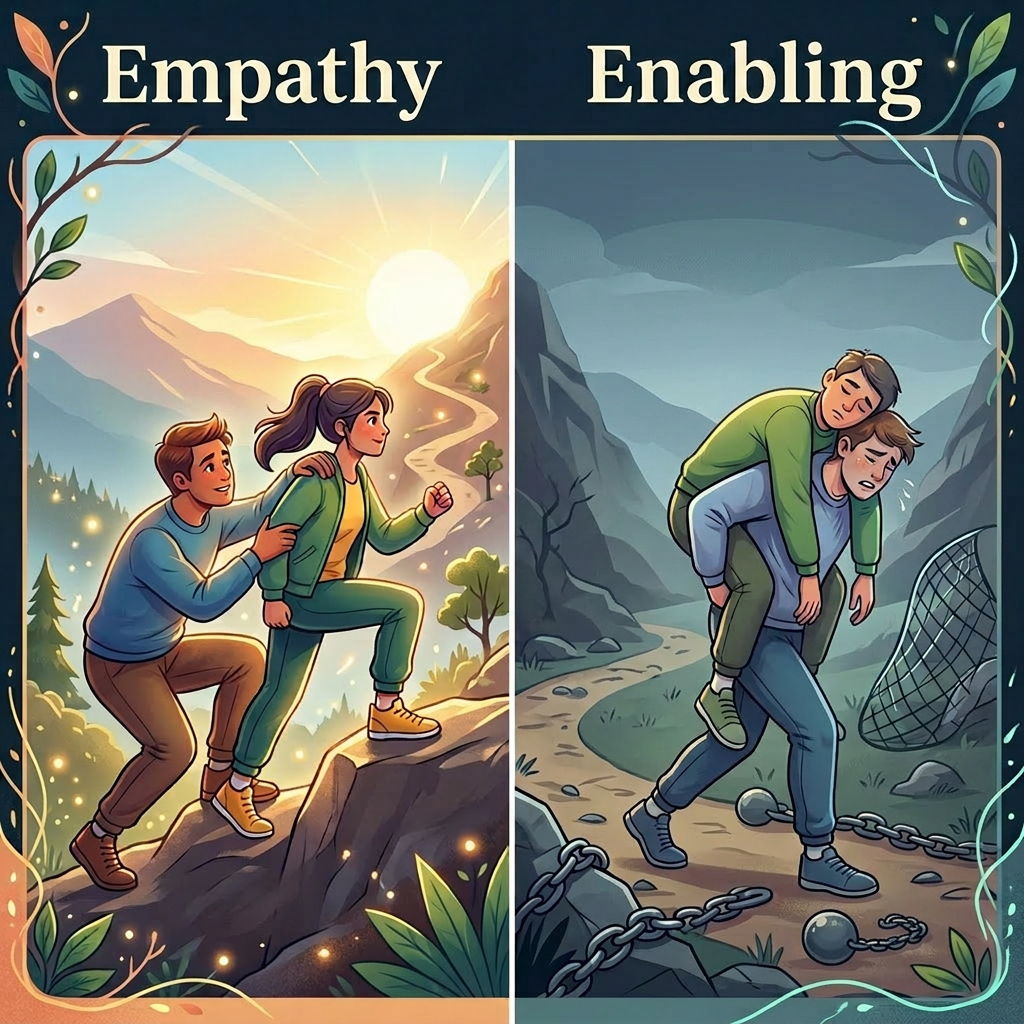
At this far end of the spectrum, empathy becomes enabling when the empathizer finds themselves desperately trying to remove the discomfort from the other person. This happens when we claim to feel so badly for someone else that we no longer want them to feel it. But removing someone else’s opportunity for an emotional response, (including negative emotions) no matter how well intentioned is ultimately self serving.

This becomes limiting for one party and burdensome for the other. Instead of being about the other person’s experience, it becomes about the empathizers discomfort with their experience.

If we step in, fix, soften, or carry the emotional weight— we are not helping them, but relieving what we are feeling in response to it.

In that sense, empathy that has exceeded its limit can become more self-focused than it appears.

Why This Matters

Emotional discomfort plays an important role in growth.

Feelings like frustration, regret, or sadness are not problems to be eliminated—they are part of how people learn, adapt, and develop resilience.

When we consistently remove or absorb that discomfort for others, we may unintentionally limit their ability to build those skills.

Support does not require removing the experience. It requires allowing space for it.

Differentiating the Difference

A useful distinction is this:

  • Empathy says: “I see you and understand what you’re feeling.”
  • Enabling says: “I’ll take this from you so you don’t have to feel it.”

The difference is not in how much we care, but in how we respond to that care.

Conclusion

Empathy is not the problem. In fact, it’s necessary.

But when it goes beyond a healthy limit—when it shifts from understanding to over-carrying—it can become counterproductive.

You can care deeply about someone
without carrying what is theirs to feel.

That balance is where empathy is most effective.

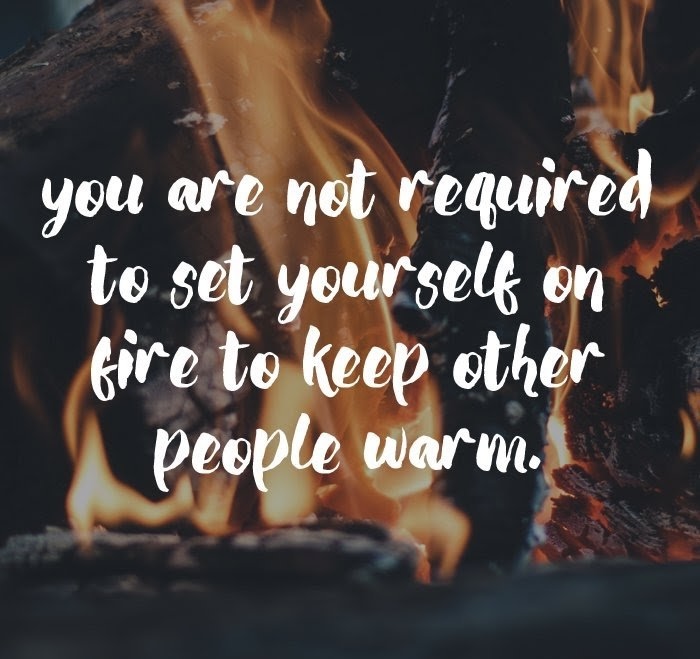
A motivational quote over a background of burning firewood that reads: 'you are not required to set yourself on fire to keep other people warm.'
Three people playing basketball and laughing on an outdoor court at sunset

Fun Isn’t Frivolous: It’s Fuel for Life

Three people playing basketball and laughing on an outdoor court at sunset

Lately I’ve been thinking a lot about fun We love it and yet we are not having enough of it.

We are often entertained. Frequently wanting a distraction. Planning future events. But not let ourselves have real fun in the moment.

Somewhere along the way, too many of us lose touch with it. I hypothesis it starts in teenage years when we start feeling societal pressure and demands. We slow start taking life too seriously. Then in adulthood we gradually add responsibilities and start prioritizing productivity, milestones, achievement, and earnings. We treat fun like a reward we earn after handling our responsibilities.

The problem is… life is a series of problems. So the responsibilities are never fully handled.

There will always be another email, another call, another task, another goal, another pressure, and another metric. If we try fun as future priority we won’t have it. “I’ll be happy when… turns into I can’t be happy now”

Anxiety Might Push You. Fun Sustains You.

As a psychotherapist who works with perfectionism and overthinking, I see a lot of performance-based anxiety.

The pressure to succeed.
The pressure to do more.
The pressure to always be improving.

And to be fair, anxiety can be useful in the short term.

A lot of high achievers are productive because of anxiety. It helps them stay sharp, stay driven, stay on top of things.

But the issue is sustainability.

You can absolutely build success through pressure.
You just usually can’t hold onto it for too long.

That’s where fun comes in.

Fun prevents burnout.
Fun reinvigorates us.
Fun pulls us out of performance mode and back into the present moment.

So even if anxiety pushes us towards success initially- fun is what can help keep us succesful .

Life Was Never Meant to Be Only Outcomes

When you listen to your favorite song, it isn’t about getting to the end of the song.

It’s about singing along. Maybe dancing badly in your kitchen with your loved ones.

When you play sports or board games with your kids, it isn’t about finishing the game.

It’s about playing – the laughing, bonding, harmless competition, and creating memories.

When you go on vacation, it sure as hell isn’t about get back home. It’s not completing the trip.

It’s enjoy it. Having fun along the journey.

Somewhere along the way, many adults start treating life like one giant checklist. Finish the task. Reach the milestone. Get to the next thing.

But life was never meant to only be completed.

It was meant to be lived.

What Is “True Fun”?

We all know what fun is in theory. But I think it helps to define it more clearly.

True fun usually includes three things:

1. Playfulness

Not taking everything so seriously. Room for humor, silliness, spontaneity.

2. Flow

Being immersed enough in the moment that you forget your to-do list for a while.

3. Connection

Sharing moments, laughter, energy, or meaning with others.

That might look like:

  • Playing ping pong and laughing at the ridiculous points in between keeping score
  • Singing karaoke in the kitchen and forgetting what day it is
  • Sitting at dinner with family, recapping the day and joking around
  • Shooting hoops with no agenda other than enjoying yourself
  • Going for a walk and actually noticing the day

Fun often sounds small. But its impact is not small.

Fun Helps Mental Health

Fun is not a cure for anxiety or depression.

But it can be a powerful part of healing.

Fun can help us reconnect with ourselves.
It can remind us we are more than our stress.
It can increase willingness to participate in life again.
It can restore confidence, connection, and energy.

Sometimes people think mental health is only about deep work, heavy conversations, fixing problems.

That matters too.

But healing also happens in laughter.
In movement.
In shared moments.
In joy that doesn’t need to be earned.

This Week, Try This

Don’t ask only:

“What do I need to get done?”

Also ask:

“What can I do to make this day more fun?”

That question can change more than people realize.

Because fun isn’t childish.
It isn’t lazy.
It isn’t extra.

Fun is often the thing that makes life feel like life again.

Parenting by Example: How Confidence is Modeled, Not Taught

At this stage of my career, I primarily work with young adults and adults navigating anxiety, depression, and self-esteem. But not that long ago, I was the young, cool therapist—the one parents wanted their ADHD or ODD sons to connect with.

I still love child development. I still enjoy working with kids and adolescents.

But nothing grounds you quite like having an 11-year-old daughter and a 13-year-old stepdaughter.

I am no longer the young, cool therapist. And almost certainly not the cool guy at home. (The eye rolls out number the laughs nowadays)

And honestly? That’s probably for the best.

When Being “Cool” Stops Being the Goal

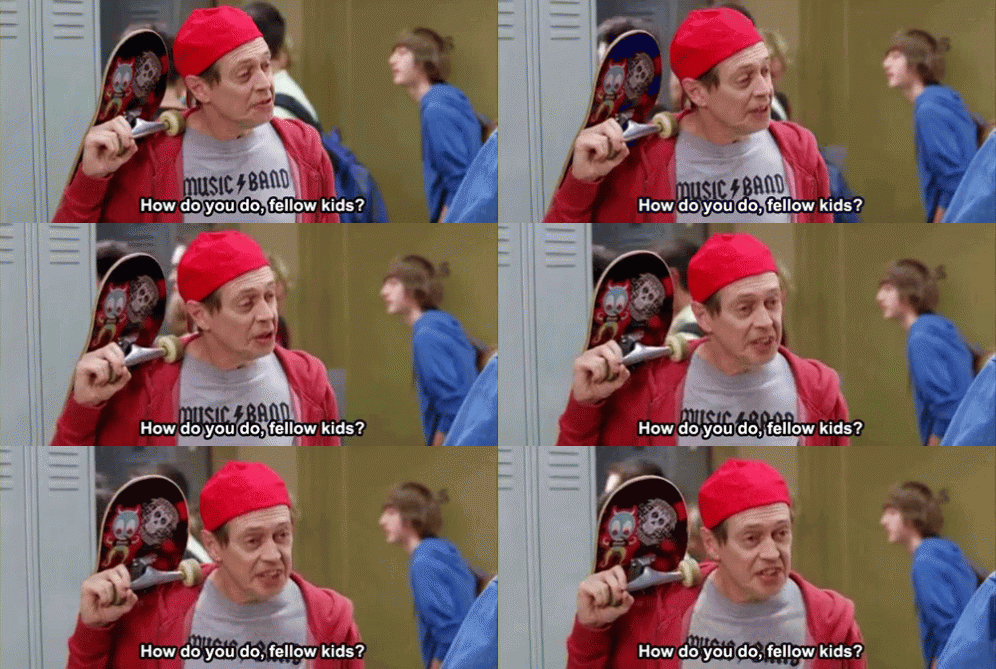
Not that I’m trying to be cool to middle schoolers. Insert generic dad joke about not having rizz. (Listen, I’m cool enough to know not to even attempt it.)

A man wearing a red cap and skateboard, dressed in casual attire, greets a group of young people with the phrase 'How do you do, fellow kids?'

What’s shifted isn’t my sense of humor—it’s my focus. Somewhere in the second decade of parenting, the question quietly changes. It’s no longer about telling them they’re awesome little achievers that can do anything they put their little minds to.

It becomes about showing them what it looks like to be proud of yourself in life.

Am I someone I’d want to become?

Am I leading by example?

The First Decade: Building Their Confidence and life. 

During the first decade of parenting, I spent a lot of energy cultivating my daughter’s self-esteem. I encouraged her and celebrated her achievements. I made sure she knew she was capable and worthy.

Lately?

She gives significantly fewer shits about what I think.

She rolls her eyes and sarcastically asks “is this another life lesson?!” She complains when I encourage her to be proud of herself. I get it. It’s dorky now. It’s parent stuff.

The Second Decade: Modeling Living a confident enjoyable life. 

What actually needs my attention now isn’t coaching her confidence—but modeling it.

That means being proud of myself.

Not “cool” (that ship sailed when I started making comments worthy of Progressive Insurance commercials).

But grounded. Intentional. Honest.

Sometimes I catch myself wondering:

Would my daughter want to live a life like mine?

Two individuals running on treadmills in a gym with large windows showing a view of the outdoors.

Leading by Example Isn’t About Control—It’s About Consistency

I hope my daughter continues to be her own independent, creative self. (Though, good or bad, she has many of my idiosyncrasies.)

My role now feels less about directing her growth and more about living in a way that demonstrates self-respect.

One of the best things we can do for the people we love is take care of ourselves. We are not do it performatively, not perfectly, but consistently.

Good parenting isn’t just being present and attentive.

It’s being able to stand behind the life you’re living.

That includes being proud of your own:

  1. Daily habits
  2. Physical health and movement
  3. Mental health and emotional regulation
  4. Relationships
  5. Interests, hobbies, and passions

Kids notice what we do far more than what we say.

A framed sign with the text 'SELF CARE ISN'T SELFISH' displayed against a pink background, accompanied by a shadow from a plant.

Modeling Matters More Than Motivating

Recently, our girls did wall sits for an absurd amount of time—because I was doing a wall-sit challenge at my gym.

No lecture required.

No motivational speech.

Just modeling.

My daughter has also been leaning into humor lately. (I like to think we’ve made her life just stressful enough to have good material, yet comfortable enough to feel secure being silly.)

She told me a story from school that stuck with me.

She wanted to leave school early. She Googled me, pulled up my website, and showed her friends my profile—where my session fees are listed.

She announced:

“Guys, I have to come up with at least a hundred dollars for my dad to come get me.”

I was proud—not because she was “flexing,” but because she was playful, confident, and comfortable sharing this tibdit with her classmates ( and now with me). She proceeded to ask her classmates if she looked like me. (She did not need confirmation—unfortunately- poor girl looks exactly like her dad.)

What that moment told me was this:

She wasn’t embarrassed by me.

She wasn’t hiding me.

She was proud.

A man in sunglasses stands with a water bottle and a towel over his shoulder, watching two children play soccer in a sunny park.

Being Someone Your Kids Can Be Proud Of Starts With You

I know 11 is still young. The next decade will likely involve plenty of eye-rolling, boundary-testing, and days where I unequivocally take the L.

But I want to give myself the best chance possible—not by being perfect, but by being someone I respect.

Because when I’m proud of how I live,

when I show up for myself,

when I take care of my mental and physical health—

I’m not just teaching her confidence.

I’m showing her what it looks like.

And hopefully, one day, she’ll be damn proud of herself too.