Overcoming Social Isolation: Tips for Meaningful Engagement

A circle of wooden chairs arranged on a stage with theater seats in background

Have you ever felt left out? Other people made plans and somehow you weren’t included. That can feel extremely hurtful and deeply personal.

For many people, exclusion triggers feelings of rejection or abandonment. Those already struggling with isolation or loneliness may feel an even stronger urge to retreat inward. Or worse, the pain can come out sideways through anger, bitterness, passive aggression, or resentment.

Ironically, feeling excluded often changes how we behave socially — and can unintentionally create even more disconnection.

Like many things we talk about, fighting the trigger usually doesn’t help. Acceptance does.

Unfortunately, the child who feels left out will understandably pout or complain that nobody included them. But while the reaction makes sense emotionally, it usually doesn’t create more positive social interaction afterward.

Adults do this too.

The parent who guilts their adult children for not calling enough.
The friend who keeps score of invitations.
The partner who focuses on needing more reassurance.

When we become hyper-focused on rejection, we can unknowingly reinforce the very isolation we’re trying to escape.

It’s not about less rejection. It’s about more connection.

It’s not the absence of the negative (exclusion), but the presence of the positive (inclusion).

Instead of staying stuck on:
“Why was I excluded?”

Shift toward:
“How can I participate more?”
“How can I contribute socially?”
“What role can I offer here?”
“What do I genuinely appreciate about this person or group?”

And participating more doesn’t necessarily mean taking up more space. Sometimes it means providing more space.

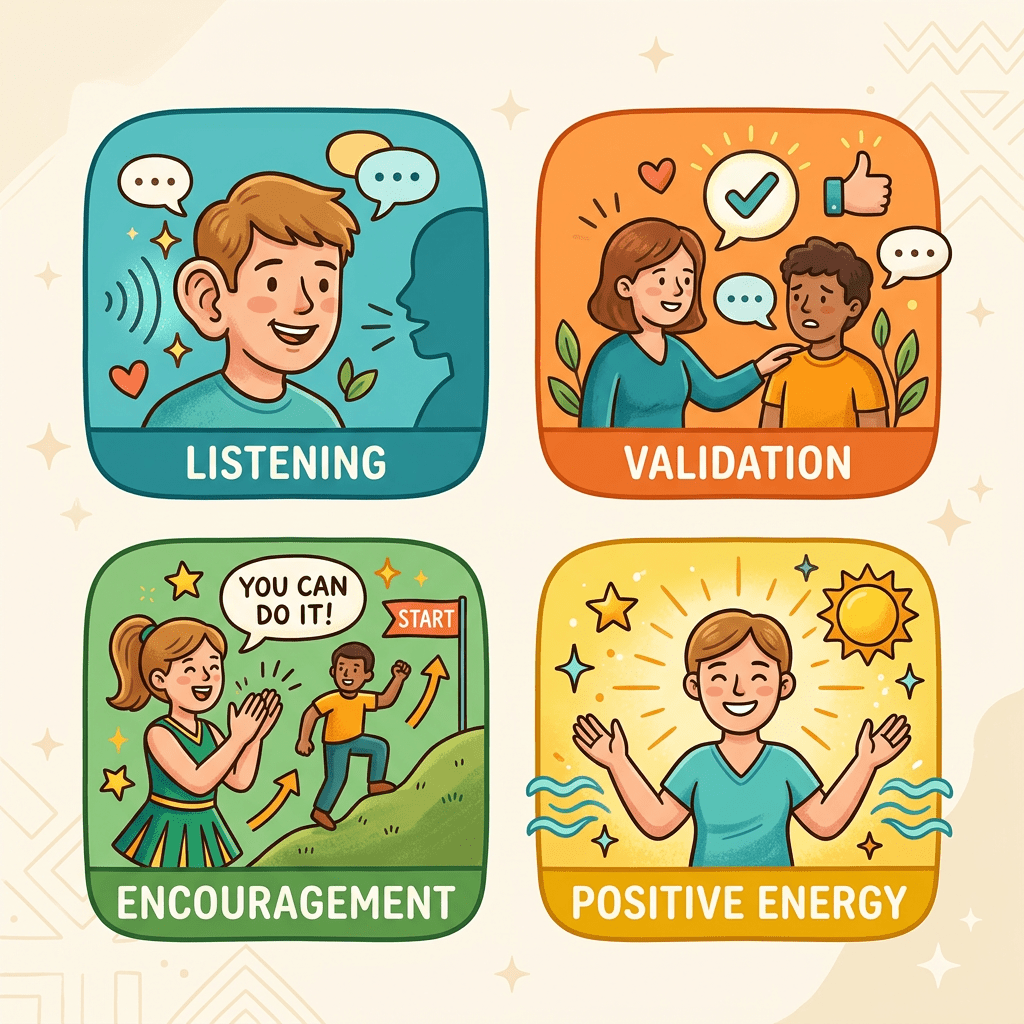
Active listening.
Validation.
Encouragement.
Humor or playfulness.
Positive energy.
Curiosity about others.

Four illustrations labeled listening, validation, encouragement, and positive energy showing supportive communication

Taking a healthy active role socially usually isn’t loud. Most of the time it’s subtle.

People naturally gravitate toward those who feel present, engaged, welcoming, and enjoyable to be around. That doesn’t mean becoming fake or performing for approval. It means recognizing that connection grows through participation.

For the person who feels disconnected from family.
The adult with grown children they rarely hear from.
The partner craving more quality time or attention.

Constantly highlighting your hurt or demanding fairness usually doesn’t create closeness. Connection tends to grow through more pleasant, present, emotionally safe interactions.

Just as constantly looking for exclusion can trigger undesirable reactions, looking for evidence that we are wanted and included often creates healthier ones.

The more connected and at ease we feel, the more likely we are to participate positively, engage socially, and create enjoyable experiences with others.

And yes — sometimes this means becoming someone who is a little more fun to be around, even if it initially feels unfamiliar or unnatural.

Not fake.
Not performative.
Just more engaged with life.

You probably don’t actually want the pity invite anyway.
The invite out of obligation.
The forced fairness invite.

That doesn’t satisfy the social craving.

Connection does.

So start connecting.

And if connecting with others feels difficult right now, connect with yourself first.

Forest path with sun rays shining through tall trees and leafy plants

Go for a nature walk.
Exercise.
Play an instrument.
Write something.
Paint.
Take a class.
Develop hobbies.
Create things.
Do shit for the fun of it.

Fun creates energy.
Energy creates engagement.
Engagement creates connection.

Feeling badly for ourselves reinforces isolation. Participation interrupts it.

Be present and be pleasant.

Three people playing basketball and laughing on an outdoor court at sunset

Fun Isn’t Frivolous: It’s Fuel for Life

Three people playing basketball and laughing on an outdoor court at sunset

Lately I’ve been thinking a lot about fun We love it and yet we are not having enough of it.

We are often entertained. Frequently wanting a distraction. Planning future events. But not let ourselves have real fun in the moment.

Somewhere along the way, too many of us lose touch with it. I hypothesis it starts in teenage years when we start feeling societal pressure and demands. We slow start taking life too seriously. Then in adulthood we gradually add responsibilities and start prioritizing productivity, milestones, achievement, and earnings. We treat fun like a reward we earn after handling our responsibilities.

The problem is… life is a series of problems. So the responsibilities are never fully handled.

There will always be another email, another call, another task, another goal, another pressure, and another metric. If we try fun as future priority we won’t have it. “I’ll be happy when… turns into I can’t be happy now”

Anxiety Might Push You. Fun Sustains You.

As a psychotherapist who works with perfectionism and overthinking, I see a lot of performance-based anxiety.

The pressure to succeed.
The pressure to do more.
The pressure to always be improving.

And to be fair, anxiety can be useful in the short term.

A lot of high achievers are productive because of anxiety. It helps them stay sharp, stay driven, stay on top of things.

But the issue is sustainability.

You can absolutely build success through pressure.
You just usually can’t hold onto it for too long.

That’s where fun comes in.

Fun prevents burnout.
Fun reinvigorates us.
Fun pulls us out of performance mode and back into the present moment.

So even if anxiety pushes us towards success initially- fun is what can help keep us succesful .

Life Was Never Meant to Be Only Outcomes

When you listen to your favorite song, it isn’t about getting to the end of the song.

It’s about singing along. Maybe dancing badly in your kitchen with your loved ones.

When you play sports or board games with your kids, it isn’t about finishing the game.

It’s about playing – the laughing, bonding, harmless competition, and creating memories.

When you go on vacation, it sure as hell isn’t about get back home. It’s not completing the trip.

It’s enjoy it. Having fun along the journey.

Somewhere along the way, many adults start treating life like one giant checklist. Finish the task. Reach the milestone. Get to the next thing.

But life was never meant to only be completed.

It was meant to be lived.

What Is “True Fun”?

We all know what fun is in theory. But I think it helps to define it more clearly.

True fun usually includes three things:

1. Playfulness

Not taking everything so seriously. Room for humor, silliness, spontaneity.

2. Flow

Being immersed enough in the moment that you forget your to-do list for a while.

3. Connection

Sharing moments, laughter, energy, or meaning with others.

That might look like:

  • Playing ping pong and laughing at the ridiculous points in between keeping score
  • Singing karaoke in the kitchen and forgetting what day it is
  • Sitting at dinner with family, recapping the day and joking around
  • Shooting hoops with no agenda other than enjoying yourself
  • Going for a walk and actually noticing the day

Fun often sounds small. But its impact is not small.

Fun Helps Mental Health

Fun is not a cure for anxiety or depression.

But it can be a powerful part of healing.

Fun can help us reconnect with ourselves.
It can remind us we are more than our stress.
It can increase willingness to participate in life again.
It can restore confidence, connection, and energy.

Sometimes people think mental health is only about deep work, heavy conversations, fixing problems.

That matters too.

But healing also happens in laughter.
In movement.
In shared moments.
In joy that doesn’t need to be earned.

This Week, Try This

Don’t ask only:

“What do I need to get done?”

Also ask:

“What can I do to make this day more fun?”

That question can change more than people realize.

Because fun isn’t childish.
It isn’t lazy.
It isn’t extra.

Fun is often the thing that makes life feel like life again.

Embrace Change: The Power of Identity in Personal Growth

A pair of black and blue basketball shoes placed on a stone surface with green grass in the background.

I shared this story with someone recently who was struggling with identity, confidence, and feeling stuck. The more I thought about it, the more I realized it applies to a lot of people—personally and professionally.

Some people will remember the early days of me doing all-out sprints in Jordans. I’m lucky my knees survived.

At the time, it made perfect sense to me.

Not because they were built for running. They weren’t. It made sense because they matched who I believed I was.

Basketball was my sport. Basketball had culture. It had confidence, energy, familiarity. It was part of my history. Running, on the other hand, was something you did for conditioning. It wasn’t something I identified with. It belonged to a different type of person.

That distinction mattered more than I understood.

Because many of us do this in life.

We step into something new while trying to preserve an old identity. We say we want growth, but we bring outdated self-perceptions into new environments. We want new results while staying emotionally attached to the version of ourselves that feels familiar.

That creates friction.

Eventually, after enough feedback, my stubborn ass bought real running shoes.

Small purchase.

Big shift.

The shoes didn’t magically change my life. They didn’t make me faster overnight. They didn’t transform me into a runner.

What they did do was signal that I was ready to take this new chapter seriously.

They helped me stop relating only to who I had been and become more open to who I was becoming.

That’s an important distinction.

Real change usually starts with action. You show up. You practice. You make better choices. You build consistency.

But sustainable change often requires something deeper: a shift in identity.

You stop saying, “I’m trying to do this.”

And start saying, “This is part of who I am now.”

That applies everywhere:

The person trying to become healthier while still seeing themselves as someone who always quits. The professional stepping into leadership while still thinking like they need permission. The person rebuilding after divorce, loss, or burnout while still defining themselves by the old chapter. The entrepreneur trying to grow while still attached to the safety of playing small.

Behavior matters.

But behavior becomes more powerful when it aligns with identity.

I had already started running before I bought those shoes. But it wasn’t until I changed how I saw myself that it started to feel meaningful.

Sometimes the next level of growth isn’t more effort.

It’s updating the story you keep telling yourself.

You don’t need to start running.

You don’t need to buy new shoes.

But if you’re stuck between who you’ve been and who you want to become, remember:

You don’t have to run in Jordans.

Therapy FAQs: Why Am I Not Seeing Progress?

One of the most common frustrations I hear in therapy is some version of:

“I’m doing the work… but I don’t feel like I’m making progress.”

That feeling can be discouraging. People accustomed to measuring growth may question therapy’s effectiveness. Those concerned with improvement or productivity might also doubt if therapy is working.

Not seeing growth in therapy doesn’t mean nothing is happening. More often, it means progress is showing up in ways that are slower. It can be subtler and also harder to measure than we expect.

Here are a few reasons why therapy can feel stagnant even when meaningful change is happening.

1. Change Is Slow

We live in a world of immediate gratification. When something doesn’t produce quick results, it’s easy to assume it isn’t effective.

Cognitive Behavioral Therapy isn’t fast-acting in the way people often hope for. But it is long-lasting. Real change tends to happen gradually, through repetition, practice, and consistency—not sudden insight alone.

That slowness can be frustrating, especially if you’re used to seeing effort quickly turn into outcomes.

2. Change Is Subtle

We love watching our kids grow up, but we don’t notice their growth day by day.

The same is true for our own personal growth.

Subtle progress is hard to see—even when it’s happening. When change occurs in small increments, it often only becomes visible in hindsight. That makes it easy to overlook and dismiss in the moment.

3. You’re Not Used to Looking for Progress

Many people I work with are high-demand, operating-at-maximum-efficiency types.

Your brain is used to looking for the deficit, not the progress.

By “deficit,” I mean the area short of perfection—the place where you could still improve. When your mind is trained this way, it becomes very good at spotting problems and very bad at taking inventory of wins.

We get so used to asking “What still needs work?” that we rarely pause to notice what has changed.

CBT sessions help slow this process down and intentionally identify progress—even when that progress is simply prioritizing mental health by showing up consistently to sessions.

That still counts.

4. Progress Is Not Linear

If we start plotting points of happiness or progress, it becomes clear pretty quickly that growth isn’t a straight line.

You’re not always going to feel good.

You’re not always going to be successful.

Sometimes you stub your toe.

Sometimes you get sick.

Sometimes you react to a trigger in a way you wish you hadn’t.

Those moments are just that—moments. Not the journey.

Temporary setbacks don’t erase progress. They’re part of it.

5. You’re Trying… But Are You Really Trying?

Photo by Tima Miroshnichenko on Pexels.com

Effort can be difficult to define, especially in therapy.

It’s easy to feel like you’re trying just by talking about things in session. But are you doing the work outside of therapy?

That might look like:

Journaling Taking breaks Practicing boundaries Prioritizing the right kind of self-care

Insight matters—but insight alone rarely creates change. Behavior and practice are where progress tends to take root.

6. Effort Doesn’t Equal Outcome

This part is important—and often overlooked.

Sometimes we are doing the work.

We can do the right things, and it still doesn’t mean we’ll get the desired results—at least not yet.

That doesn’t mean the effort is wasted.

Keep up the effort.

Keep noticing the effort.

Give yourself some damn credit.

And trust the process.

Final Thoughts

Therapy isn’t about constant improvement or feeling better all the time. It’s about learning how to relate differently to your thoughts, emotions, and behaviors over time.

If therapy feels slow or frustrating, that doesn’t mean it isn’t working. It may mean the changes you’re making are quieter, deeper, and still unfolding.

Those changes tend to last.

Parenting by Example: How Confidence is Modeled, Not Taught

At this stage of my career, I primarily work with young adults and adults navigating anxiety, depression, and self-esteem. But not that long ago, I was the young, cool therapist—the one parents wanted their ADHD or ODD sons to connect with.

I still love child development. I still enjoy working with kids and adolescents.

But nothing grounds you quite like having an 11-year-old daughter and a 13-year-old stepdaughter.

I am no longer the young, cool therapist. And almost certainly not the cool guy at home. (The eye rolls out number the laughs nowadays)

And honestly? That’s probably for the best.

When Being “Cool” Stops Being the Goal

Not that I’m trying to be cool to middle schoolers. Insert generic dad joke about not having rizz. (Listen, I’m cool enough to know not to even attempt it.)

A man wearing a red cap and skateboard, dressed in casual attire, greets a group of young people with the phrase 'How do you do, fellow kids?'

What’s shifted isn’t my sense of humor—it’s my focus. Somewhere in the second decade of parenting, the question quietly changes. It’s no longer about telling them they’re awesome little achievers that can do anything they put their little minds to.

It becomes about showing them what it looks like to be proud of yourself in life.

Am I someone I’d want to become?

Am I leading by example?

The First Decade: Building Their Confidence and life. 

During the first decade of parenting, I spent a lot of energy cultivating my daughter’s self-esteem. I encouraged her and celebrated her achievements. I made sure she knew she was capable and worthy.

Lately?

She gives significantly fewer shits about what I think.

She rolls her eyes and sarcastically asks “is this another life lesson?!” She complains when I encourage her to be proud of herself. I get it. It’s dorky now. It’s parent stuff.

The Second Decade: Modeling Living a confident enjoyable life. 

What actually needs my attention now isn’t coaching her confidence—but modeling it.

That means being proud of myself.

Not “cool” (that ship sailed when I started making comments worthy of Progressive Insurance commercials).

But grounded. Intentional. Honest.

Sometimes I catch myself wondering:

Would my daughter want to live a life like mine?

Two individuals running on treadmills in a gym with large windows showing a view of the outdoors.

Leading by Example Isn’t About Control—It’s About Consistency

I hope my daughter continues to be her own independent, creative self. (Though, good or bad, she has many of my idiosyncrasies.)

My role now feels less about directing her growth and more about living in a way that demonstrates self-respect.

One of the best things we can do for the people we love is take care of ourselves. We are not do it performatively, not perfectly, but consistently.

Good parenting isn’t just being present and attentive.

It’s being able to stand behind the life you’re living.

That includes being proud of your own:

  1. Daily habits
  2. Physical health and movement
  3. Mental health and emotional regulation
  4. Relationships
  5. Interests, hobbies, and passions

Kids notice what we do far more than what we say.

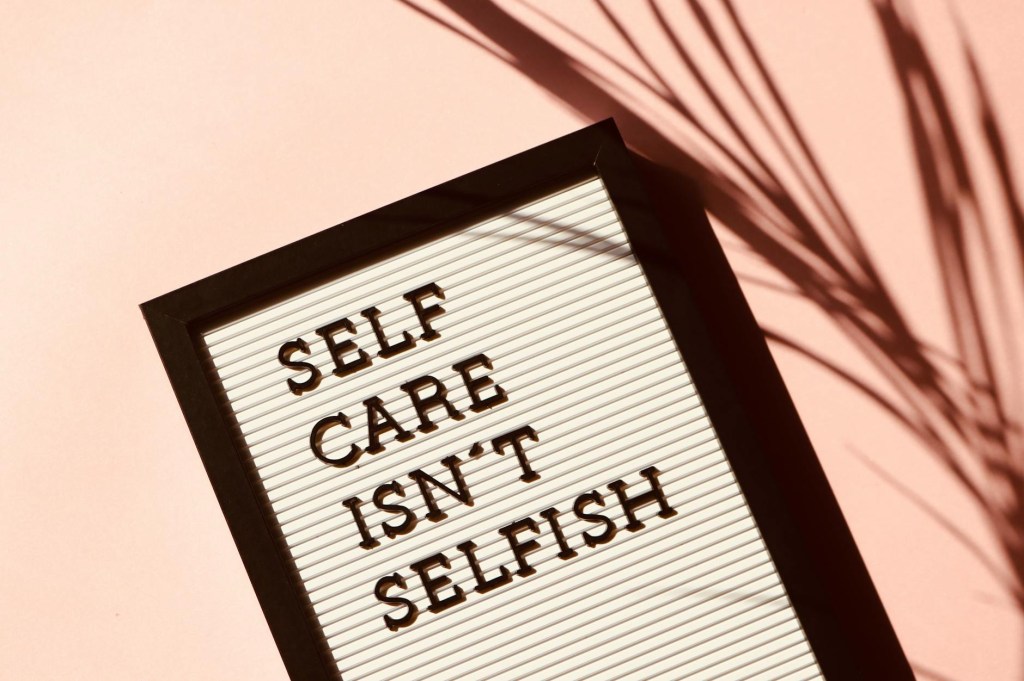
A framed sign with the text 'SELF CARE ISN'T SELFISH' displayed against a pink background, accompanied by a shadow from a plant.

Modeling Matters More Than Motivating

Recently, our girls did wall sits for an absurd amount of time—because I was doing a wall-sit challenge at my gym.

No lecture required.

No motivational speech.

Just modeling.

My daughter has also been leaning into humor lately. (I like to think we’ve made her life just stressful enough to have good material, yet comfortable enough to feel secure being silly.)

She told me a story from school that stuck with me.

She wanted to leave school early. She Googled me, pulled up my website, and showed her friends my profile—where my session fees are listed.

She announced:

“Guys, I have to come up with at least a hundred dollars for my dad to come get me.”

I was proud—not because she was “flexing,” but because she was playful, confident, and comfortable sharing this tibdit with her classmates ( and now with me). She proceeded to ask her classmates if she looked like me. (She did not need confirmation—unfortunately- poor girl looks exactly like her dad.)

What that moment told me was this:

She wasn’t embarrassed by me.

She wasn’t hiding me.

She was proud.

A man in sunglasses stands with a water bottle and a towel over his shoulder, watching two children play soccer in a sunny park.

Being Someone Your Kids Can Be Proud Of Starts With You

I know 11 is still young. The next decade will likely involve plenty of eye-rolling, boundary-testing, and days where I unequivocally take the L.

But I want to give myself the best chance possible—not by being perfect, but by being someone I respect.

Because when I’m proud of how I live,

when I show up for myself,

when I take care of my mental and physical health—

I’m not just teaching her confidence.

I’m showing her what it looks like.

And hopefully, one day, she’ll be damn proud of herself too.

Realistic Goal Setting: Why Most New Year’s Resolutions Fail (and What Actually Works)

Every January, many people set New Year’s resolutions with the hope that this will be the year they finally become more disciplined, motivated, organized, emotionally regulated, physically healthier, and financially stable.

By February, most of those goals have stalled or been abandoned.

This is not because people are lazy or lack willpower. More often, resolutions fail because goal-setting is approached from an unrealistic psychological framework.

Understanding why New Year’s resolutions fail—and how behavior change actually works—can help create more sustainable and mentally healthy goals.

The Motivation Myth in Goal Setting

One of the most common beliefs behind failed resolutions is:

“I need to be motivated to start.”

Although this belief feels intuitive, it is psychologically inaccurate. From a Rational Emotive Behavior Therapy (REBT) perspective, this represents an unrealistic expectation that often leads to avoidance, frustration, and self-criticism.

Motivation is not a prerequisite for action. In most cases, motivation follows behavior, not the other way around. Research in behavioral psychology consistently shows that action precedes emotional momentum.

Waiting to feel motivated before starting is similar to waiting for confidence before engaging in the behavior that builds confidence. The sequence is reversed.

Why Unrealistic Goals Lead to Burnout

In addition to relying on motivation, many people construct goals that are overly broad or rigid:

“I’m going to completely change my life.” “I’m never doing that again.” “I’m all in or nothing.”

These all-or-nothing approaches are common cognitive distortions. While they may feel decisive, they often lead to burnout and reinforce the belief that setbacks reflect personal failure.

Sustainable behavior change tends to be incremental, repetitive, and unremarkable.

One habit.

Made manageable.

Repeated imperfectly.

This is not a lack of ambition—it is a more accurate model of how long-term change occurs.

The Problem with “New Year, New Me”

Popular self-improvement narratives often suggest that meaningful change requires becoming a different person. Clinically, this framing can undermine self-efficacy by implying that the current self is insufficient to initiate growth.

From a therapeutic perspective, progress does not require reinvention. It requires consistent effort from the existing self.

Behavior change is not an identity overhaul. It is a practice.

How Self-Defeating Thoughts Sabotage Progress

Before people disengage behaviorally, they often disengage cognitively. Self-defeating beliefs typically precede avoidance.

Common examples include:

“I need to feel motivated to start.” “I should be further along by now.” “If I can’t do it perfectly, what’s the point?”

Although these thoughts may feel true, they tend to increase psychological pressure, reduce distress tolerance, and make quitting more likely.

A Rational Alternative to Motivation-Based Change

REBT emphasizes replacing unhelpful beliefs with rational, flexible alternatives that support persistence:

“I do not need to feel motivated to act.” “I can tolerate discomfort.” “I can improve one small thing at a time.” “Effort itself has value.”

This is not positive thinking or affirmation-based work. It is cognitive restructuring grounded in behavioral principles.

Progress is built through daily effort and consistency, especially when motivation is low.

Practical, Realistic Goal Setting Strategies

For individuals seeking healthier and more effective goal setting, the following principles are supported by behavioral psychology and clinical practice:

Focus on behaviors rather than outcomes Choose one habit instead of multiple simultaneous changes Expect discomfort and plan for it rather than avoiding it Measure success by follow-through, not intensity

Less pressure.

More discipline.

Smaller steps.

This approach does not lower standards—it places them where they are psychologically sustainable.

Keywords targeted: realistic goal setting, New Year’s resolutions and mental health, motivation and behavior change, REBT therapy, behavior change psychology, self-discipline vs motivation

“Nothing” Can Make Us Happy

Today I realized something important: nothing is going to make me happy.

For so long, I believed happiness was something to strive for—an outcome that would arrive once I achieved enough, earned enough, or became enough. But if happiness depends on something, then that very thing—or the absence of it—also has the power to make me unhappy. That’s not freedom; that’s dependency.

The truth is, if I need something to make me happy, I’ve already placed my peace of mind outside myself. I’ve made it conditional, fragile, and fleeting.

So what if nothing could make me happy?

Happiness Without Conditions

Imagine existing with a default happiness—one that doesn’t require circumstances, achievements, or approval.

We don’t need more money or professional success.

We don’t need a lower number on the scale.

We don’t need to hit the gym a certain number of times.

We don’t need the luxury vacation or the dream house.

We don’t need likes, followers, or recognition.

We don’t even need family or friends to validate our worth.

Of course, these things can bring comfort, joy, and connection. They can enrich our lives. But they are not prerequisites for happiness. Happiness itself has no requirements.

Detachment as Freedom

Contrary to societal norms our peace of mind does not come from adding, but from subtracting. That is reducing expectations and demands. When we detach from the belief that happiness must be earned or supplied by outside factors, we step into true freedom.

Detachment doesn’t mean giving up on goals or relationships. It means we can enjoy them without being controlled by them. We can love fully, strive fully, and live fully—while knowing that our happiness exists independent of outcomes.

Choosing Happiness in Nothing

So today, I invite you to join me in this radical experiment: be happy with nothing. Not because life is empty, but because happiness doesn’t need to be filled.

When nothing makes us happy, everything else becomes a bonus. Choose happiness and look for at least one bonus every day.

Stop Waiting to Be Happy: Finding Joy in the Now

Be honest — how often do you tell yourself, “I’ll be happy when…”?

When you get the promotion.

When you meet the right person.

When the kids are older.

When life finally “settles down.”

When you’ve made more money

We’ve all been there. The truth is, many of us want to be happy and even know how to cultivate it — but we keep postponing it. We make happiness conditional, waiting for life to line up perfectly before we give ourselves permission to feel good.

But here’s the problem: there’s always another “next thing.” The next goal, the next milestone, the next version of “better.” That mindset keeps us chasing happiness instead of living it.

The “I’ll Be Happy When…” Trap

This way of thinking sounds like:

“I’ll feel better once I get that promotion.” “I’ll be happy when I find my person.” “I just need to make more money” “I’ll relax once I retire.”

It’s an exhausting cycle — achieving one goal only to move the bar higher again. Each win feels fleeting because the next target is already waiting.

This isn’t real happiness; it’s conditional happiness — and conditional happiness is fragile. When things go well, you feel great. But when life doesn’t cooperate, your mood sinks.

Shifting to Unconditional Happiness

Unconditional happiness doesn’t mean ignoring challenges or pretending everything is perfect. It means deciding to be happy despite imperfections. It’s about giving yourself permission to experience joy and peace in the present moment, even as you work toward your goals.

Try reframing your thoughts:

“I’d like to get that promotion, but I can appreciate where I am right now.” “I’d like to meet someone, but I can be happy with who I am.” “Life isn’t perfect, but I can still choose to be content today.” “I can breathe today and trust myself to continue to be successful “

When you remind yourself, “I can be happy now,” you reclaim your power. You stop outsourcing your joy to the future and start owning it in the present.

Happiness Is a Daily Practice

Happiness isn’t something we stumble upon — it’s something we create, moment by moment. It’s choosing gratitude, curiosity, connection, and self-compassion today, not later.

So, take a breath. Look around. There’s so much good in this moment, even if everything isn’t exactly how you prefer it.

Don’t wait for the next milestone to be happy. Start where you are.

You can be happy now.