What “I Have Nothing to Talk About” Can Actually Mean

There are certain phrases psychotherapists hear that immediately get our attention.

One of them is:

“I have nothing to talk about.”

Now, if I’m being honest, most therapists don’t hear that statement and simply take it at face value.

We get curious.

Is there something they are avoiding?

Is there something they’re glossing over?

Is this an opportunity to dive deeper into something?

What uncomfortable feeling are we dancing around?

After all, avoidance is one of the most common patterns people bring into therapy.

Not because they’re dishonest.

Not because they’re resistant.

Because they’re human.

Why We Avoid

Avoidance gets a bad reputation, but it exists for a reason.

If something feels painful, uncomfortable, embarrassing, uncertain, or overwhelming, our minds naturally try to move away from it.

We change the subject.

We distract ourselves.

We stay busy.

We tell ourselves we’ll deal with it later.

We convince ourselves it isn’t a big deal.

For a brief moment, avoidance works.

That’s why people do it.

The difficult conversation gets postponed.

The anxiety temporarily decreases.

The uncomfortable emotion fades into the background.

The problem is that while avoidance often provides short-term relief, it tends to create long-term suffering.

The conversation still needs to happen.

The decision still needs to be made.

The grief still needs to be felt.

The fear still waits for us.

One of the primary goals of therapy is helping people gradually build the ability to approach the things that they would rather avoid.

Not because it’s pleasant.

Because it’s often necessary for change.

The Therapist’s Suspicion

This is why therapists become suspicious when someone says they have nothing to talk about.

We’ve heard it before.

Sometimes “nothing to talk about” means:

“I don’t want to discuss the fight I had with my spouse.”

Sometimes it means:

“I don’t want to admit how anxious I’ve been.”

Sometimes it means:

“I know exactly what I need to talk about, and I’m hoping we can spend the session discussing the weather instead.”

Years of experience teach us that there is often something sitting beneath the surface.

Which is exactly why a recent session stuck with me.

Sometimes There Really Is Nothing To Talk About

About fifteen minutes into a session, a client told me they didn’t really have anything to discuss.

My therapist brain immediately started searching.

Work?

Family?

Goals?

Stressors?

Future plans?

I explored a few areas.

And what I found surprised me.

There wasn’t a hidden crisis.

There wasn’t a conflict being avoided.

There wasn’t some painful topic hiding behind the curtain.

Things were simply okay.

Not perfect.

Just okay.

And that’s different.

There was still some anticipatory anxiety about the future. There always is. Life doesn’t stop being uncertain simply because things are going well.

But in this particular moment, this person had achieved many of the goals they had worked toward.

They had made significant changes in their career.

They felt more secure in themselves.

They were handling challenges effectively.

They had done the work.

Peace Can Feel Unfamiliar

What struck me was how unusual this moment felt.

Not because peace is rare.

Because we often don’t know what to do with it.

Many people become so accustomed to solving problems that they struggle to recognize when there isn’t one.

We become scanners.

Always looking for the next issue.

The next challenge.

The next thing to fix.

The next source of stress.

Sometimes this mindset is useful.

Sometimes it helps us grow.

But sometimes it prevents us from appreciating where we currently stand.

It’s difficult to enjoy a view when you’re constantly looking for the next mountain to climb.

Celebrating Progress

So instead of searching harder for a hidden problem, we spent time acknowledging something important:

How they got to this moment of quiet peace.

We talked about the work they had done.

The changes they had made.

The growth they had achieved.

The discomfort they had tolerated.

The risks they had taken.

The person they had become.

Therapy often focuses on what’s wrong.

Naturally so. People usually come to therapy because something isn’t working.

But growth deserves attention too.

Progress deserves attention too.

The absence of suffering isn’t always avoidance.

Sometimes it’s evidence.

Evidence that the hard work is paying off.

A Final Thought

Not every therapy session is challenging because life is difficult.

Sometimes the challenge is learning to be at peace when life isn’t difficult.

Sometimes the work is allowing yourself to stop searching for a problem and simply acknowledge:

“I’m okay right now.”

That may not sound like much.

But for someone who spent years anxious, overwhelmed, self-critical, or stuck in survival mode, that moment can be one of the greatest achievements of all.

Parenting by Example: How Confidence is Modeled, Not Taught

At this stage of my career, I primarily work with young adults and adults navigating anxiety, depression, and self-esteem. But not that long ago, I was the young, cool therapist—the one parents wanted their ADHD or ODD sons to connect with.

I still love child development. I still enjoy working with kids and adolescents.

But nothing grounds you quite like having an 11-year-old daughter and a 13-year-old stepdaughter.

I am no longer the young, cool therapist. And almost certainly not the cool guy at home. (The eye rolls out number the laughs nowadays)

And honestly? That’s probably for the best.

When Being “Cool” Stops Being the Goal

Not that I’m trying to be cool to middle schoolers. Insert generic dad joke about not having rizz. (Listen, I’m cool enough to know not to even attempt it.)

A man wearing a red cap and skateboard, dressed in casual attire, greets a group of young people with the phrase 'How do you do, fellow kids?'

What’s shifted isn’t my sense of humor—it’s my focus. Somewhere in the second decade of parenting, the question quietly changes. It’s no longer about telling them they’re awesome little achievers that can do anything they put their little minds to.

It becomes about showing them what it looks like to be proud of yourself in life.

Am I someone I’d want to become?

Am I leading by example?

The First Decade: Building Their Confidence and life. 

During the first decade of parenting, I spent a lot of energy cultivating my daughter’s self-esteem. I encouraged her and celebrated her achievements. I made sure she knew she was capable and worthy.

Lately?

She gives significantly fewer shits about what I think.

She rolls her eyes and sarcastically asks “is this another life lesson?!” She complains when I encourage her to be proud of herself. I get it. It’s dorky now. It’s parent stuff.

The Second Decade: Modeling Living a confident enjoyable life. 

What actually needs my attention now isn’t coaching her confidence—but modeling it.

That means being proud of myself.

Not “cool” (that ship sailed when I started making comments worthy of Progressive Insurance commercials).

But grounded. Intentional. Honest.

Sometimes I catch myself wondering:

Would my daughter want to live a life like mine?

Two individuals running on treadmills in a gym with large windows showing a view of the outdoors.

Leading by Example Isn’t About Control—It’s About Consistency

I hope my daughter continues to be her own independent, creative self. (Though, good or bad, she has many of my idiosyncrasies.)

My role now feels less about directing her growth and more about living in a way that demonstrates self-respect.

One of the best things we can do for the people we love is take care of ourselves. We are not do it performatively, not perfectly, but consistently.

Good parenting isn’t just being present and attentive.

It’s being able to stand behind the life you’re living.

That includes being proud of your own:

  1. Daily habits
  2. Physical health and movement
  3. Mental health and emotional regulation
  4. Relationships
  5. Interests, hobbies, and passions

Kids notice what we do far more than what we say.

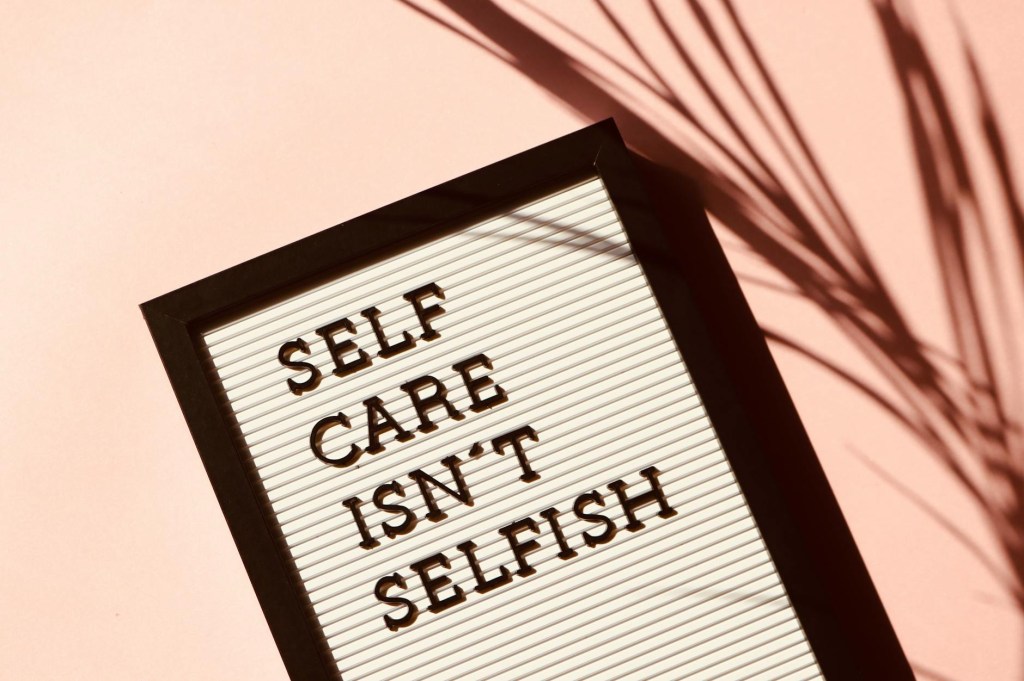
A framed sign with the text 'SELF CARE ISN'T SELFISH' displayed against a pink background, accompanied by a shadow from a plant.

Modeling Matters More Than Motivating

Recently, our girls did wall sits for an absurd amount of time—because I was doing a wall-sit challenge at my gym.

No lecture required.

No motivational speech.

Just modeling.

My daughter has also been leaning into humor lately. (I like to think we’ve made her life just stressful enough to have good material, yet comfortable enough to feel secure being silly.)

She told me a story from school that stuck with me.

She wanted to leave school early. She Googled me, pulled up my website, and showed her friends my profile—where my session fees are listed.

She announced:

“Guys, I have to come up with at least a hundred dollars for my dad to come get me.”

I was proud—not because she was “flexing,” but because she was playful, confident, and comfortable sharing this tibdit with her classmates ( and now with me). She proceeded to ask her classmates if she looked like me. (She did not need confirmation—unfortunately- poor girl looks exactly like her dad.)

What that moment told me was this:

She wasn’t embarrassed by me.

She wasn’t hiding me.

She was proud.

A man in sunglasses stands with a water bottle and a towel over his shoulder, watching two children play soccer in a sunny park.

Being Someone Your Kids Can Be Proud Of Starts With You

I know 11 is still young. The next decade will likely involve plenty of eye-rolling, boundary-testing, and days where I unequivocally take the L.

But I want to give myself the best chance possible—not by being perfect, but by being someone I respect.

Because when I’m proud of how I live,

when I show up for myself,

when I take care of my mental and physical health—

I’m not just teaching her confidence.

I’m showing her what it looks like.

And hopefully, one day, she’ll be damn proud of herself too.

“Nothing” Can Make Us Happy

Today I realized something important: nothing is going to make me happy.

For so long, I believed happiness was something to strive for—an outcome that would arrive once I achieved enough, earned enough, or became enough. But if happiness depends on something, then that very thing—or the absence of it—also has the power to make me unhappy. That’s not freedom; that’s dependency.

The truth is, if I need something to make me happy, I’ve already placed my peace of mind outside myself. I’ve made it conditional, fragile, and fleeting.

So what if nothing could make me happy?

Happiness Without Conditions

Imagine existing with a default happiness—one that doesn’t require circumstances, achievements, or approval.

We don’t need more money or professional success.

We don’t need a lower number on the scale.

We don’t need to hit the gym a certain number of times.

We don’t need the luxury vacation or the dream house.

We don’t need likes, followers, or recognition.

We don’t even need family or friends to validate our worth.

Of course, these things can bring comfort, joy, and connection. They can enrich our lives. But they are not prerequisites for happiness. Happiness itself has no requirements.

Detachment as Freedom

Contrary to societal norms our peace of mind does not come from adding, but from subtracting. That is reducing expectations and demands. When we detach from the belief that happiness must be earned or supplied by outside factors, we step into true freedom.

Detachment doesn’t mean giving up on goals or relationships. It means we can enjoy them without being controlled by them. We can love fully, strive fully, and live fully—while knowing that our happiness exists independent of outcomes.

Choosing Happiness in Nothing

So today, I invite you to join me in this radical experiment: be happy with nothing. Not because life is empty, but because happiness doesn’t need to be filled.

When nothing makes us happy, everything else becomes a bonus. Choose happiness and look for at least one bonus every day.