The Emotion
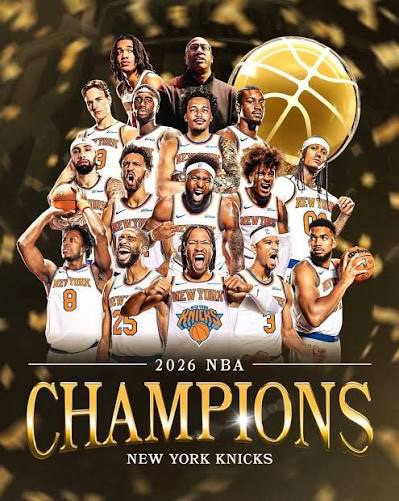
The Knicks winning a championship was a beautiful moment.
Of course, it was a beautiful moment for Knicks fans who had been waiting 53 years.
I cried almost immediately.
As the final minute ticked away, I felt myself welling up numerous times. Then when the final buzzer sounded I hugged my 11-year-old daughter and cried. I don’t think she fully understood what was happening or what this meant. How could she?
She’s 11.
When we’re 11, we expect our teams to win eventually. We expect our needs to be met. We assume the world is mostly fair. We root for our team, invest our time and energy, and naturally believe that one day it will all pay off.
Then she saw my reaction and wrapped her arms around me in a hug that felt like she understood that this was important to me.
I’ve wanted to see the Knicks win a championship since I was eight years old.
And they finally did it.
The Belief
After Game 2, standing in a crowded hometown sports bar, I kept repeating the same two phrases:
“We’re watching history.”
“It’s happening.”
After Game 4, following what will surely be remembered as one of the defining moments of this playoff run, the feeling only intensified.
“This is happening.”
“It’s really happening.”
The disbelief was understandable.
7 years ago, the Knicks were the laughingstock of the league. They were the team that threw passes off players’ backs, missed uncontested layups, and found creative ways to lose games in the final seconds. For decades, disappointment felt more predictable than success.
Many Knicks fans jokingly refer to this as “Knicks Fan PTSD.”
The comparison is obviously imperfect. Losing basketball games is not actually traumatic for fans. But there is something psychologically interesting about the phenomenon.
After enough disappointment, we learn to expect disappointment.
It’s anticipatory anxiety. It’s negative thinking and looking for the worst. We anticipate that what could go wrong will go wrong. We brace ourselves for the collapse before it arrives. We become convinced that if there is a painful way for the story to end, that’s probably how it will end.
It’s learned behavior—a belief formed through repeated experiences.
And while we’re talking about basketball, this isn’t really unique to sports.
People who have experienced repeated rejection often begin to expect rejection.
People who have been hurt in relationships may start anticipating abandonment.
People who have failed repeatedly can lose faith in their ability to succeed.
Our brains are constantly trying to predict the future based on the past. Sometimes those predictions protect us. Sometimes they keep us stuck.
That’s what made this championship feel so surprising.
For once, the story didn’t end the way many of us expected. It didn’t reinforce the negative narrative but provided a positive alternative.
The Community
Part of what made this championship feel so powerful was that it wasn’t a solitary experience.
Over the past few weeks I’ve talked Knicks basketball with clients, friends, strangers at bars, people at the gym, the pool guy, and landscapers outside my office.
For a brief period of time, an entire region was participating in the same conversation.
Sports create something increasingly rare in modern life: a shared experience.
We all watched the same games. We all felt the same tension. We all carried the same hope. And when the final buzzer sounded, millions of people celebrated together.
Maybe that’s part of why the victory felt bigger than basketball. It wasn’t just my joy. It was our joy.
Effort Over Outcomes. But We Still Love Outcomes
Now, logically, I know I didn’t earn anything.
I’ve had quarter-season tickets for the last four years. I’ve attended games, bought the merchandise, paid for the subscriptions, and invested countless hours watching and discussing Knicks basketball. But I did those things because I enjoyed them, not because I expected repayment.
The Knicks don’t know who I am.
They don’t owe me anything.
For most of the last twenty years, they barely seemed capable of functioning as a competent basketball organization despite having one of the most loyal fan bases in sports.
And yet, when they finally won, it still felt personal.
A few months ago, I made a video about one of life’s hardest truths: Trying your best does not guarantee results. I know that to be true. I suspect most people carry some version of this belief. We want to believe that if we work hard enough, long enough, good things can happen.
Not always.
Not automatically.
But sometimes.
In therapy, I often meet people who have lost faith in that possibility. After enough setbacks, enough disappointments, enough evidence pointing in the wrong direction, hope begins to feel naive.
It’s understandable.
But meaningful change often requires believing in a future that doesn’t yet exist.
Watching Jalen Brunson lead this team to a championship felt like watching that belief come to life.
There are no guarantees in therapy. There are no guarantees in business. There are no guarantees in relationships, health, or life.
But I still operate with a deeper belief.
I believe that if I exercise regularly, I’ll be healthier, stronger, and more capable tomorrow than I am today.
I believe that effort matters.
Not because it guarantees outcomes, but because it improves the odds.
In Summary…
I cried for a complex combination of reasons.
Not simply because my favorite basketball team finally won.
I cried because the moment validated something deeper.
It reinforced the idea that persistence matters.
That improvement is possible.
That years of frustration don’t always end in disappointment.
That occasionally, hard work and hope intersect.
As a therapist, I can never promise someone that things will get better. It would be dishonest to make guarantees about life.
But I do believe people can get better.
I believe relationships can heal.
I believe confidence can be built.
I believe suffering can be reduced.
I believe effort, applied consistently over time, can create meaningful change.
Maybe that’s why this championship hit me so hard.
For one night, millions of Knicks fans weren’t just celebrating basketball.
We were celebrating hope actualized.
We were celebrating the proof of concept that things can improve.
We were celebrating the idea that after enough work, enough patience, and enough belief, something wonderful might finally happen.
 Rational Psychotherapy