Parenting by Example: How Confidence is Modeled, Not Taught

At this stage of my career, I primarily work with young adults and adults navigating anxiety, depression, and self-esteem. But not that long ago, I was the young, cool therapist—the one parents wanted their ADHD or ODD sons to connect with.

I still love child development. I still enjoy working with kids and adolescents.

But nothing grounds you quite like having an 11-year-old daughter and a 13-year-old stepdaughter.

I am no longer the young, cool therapist. And almost certainly not the cool guy at home. (The eye rolls out number the laughs nowadays)

And honestly? That’s probably for the best.

When Being “Cool” Stops Being the Goal

Not that I’m trying to be cool to middle schoolers. Insert generic dad joke about not having rizz. (Listen, I’m cool enough to know not to even attempt it.)

A man wearing a red cap and skateboard, dressed in casual attire, greets a group of young people with the phrase 'How do you do, fellow kids?'

What’s shifted isn’t my sense of humor—it’s my focus. Somewhere in the second decade of parenting, the question quietly changes. It’s no longer about telling them they’re awesome little achievers that can do anything they put their little minds to.

It becomes about showing them what it looks like to be proud of yourself in life.

Am I someone I’d want to become?

Am I leading by example?

The First Decade: Building Their Confidence and life. 

During the first decade of parenting, I spent a lot of energy cultivating my daughter’s self-esteem. I encouraged her and celebrated her achievements. I made sure she knew she was capable and worthy.

Lately?

She gives significantly fewer shits about what I think.

She rolls her eyes and sarcastically asks “is this another life lesson?!” She complains when I encourage her to be proud of herself. I get it. It’s dorky now. It’s parent stuff.

The Second Decade: Modeling Living a confident enjoyable life. 

What actually needs my attention now isn’t coaching her confidence—but modeling it.

That means being proud of myself.

Not “cool” (that ship sailed when I started making comments worthy of Progressive Insurance commercials).

But grounded. Intentional. Honest.

Sometimes I catch myself wondering:

Would my daughter want to live a life like mine?

Two individuals running on treadmills in a gym with large windows showing a view of the outdoors.

Leading by Example Isn’t About Control—It’s About Consistency

I hope my daughter continues to be her own independent, creative self. (Though, good or bad, she has many of my idiosyncrasies.)

My role now feels less about directing her growth and more about living in a way that demonstrates self-respect.

One of the best things we can do for the people we love is take care of ourselves. We are not do it performatively, not perfectly, but consistently.

Good parenting isn’t just being present and attentive.

It’s being able to stand behind the life you’re living.

That includes being proud of your own:

  1. Daily habits
  2. Physical health and movement
  3. Mental health and emotional regulation
  4. Relationships
  5. Interests, hobbies, and passions

Kids notice what we do far more than what we say.

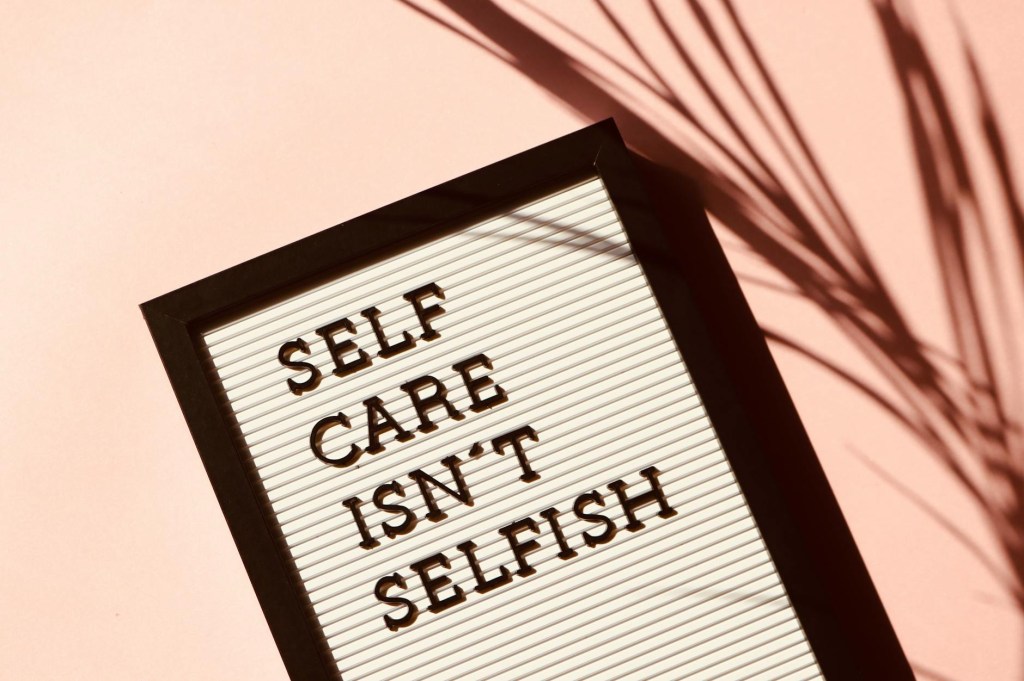
A framed sign with the text 'SELF CARE ISN'T SELFISH' displayed against a pink background, accompanied by a shadow from a plant.

Modeling Matters More Than Motivating

Recently, our girls did wall sits for an absurd amount of time—because I was doing a wall-sit challenge at my gym.

No lecture required.

No motivational speech.

Just modeling.

My daughter has also been leaning into humor lately. (I like to think we’ve made her life just stressful enough to have good material, yet comfortable enough to feel secure being silly.)

She told me a story from school that stuck with me.

She wanted to leave school early. She Googled me, pulled up my website, and showed her friends my profile—where my session fees are listed.

She announced:

“Guys, I have to come up with at least a hundred dollars for my dad to come get me.”

I was proud—not because she was “flexing,” but because she was playful, confident, and comfortable sharing this tibdit with her classmates ( and now with me). She proceeded to ask her classmates if she looked like me. (She did not need confirmation—unfortunately- poor girl looks exactly like her dad.)

What that moment told me was this:

She wasn’t embarrassed by me.

She wasn’t hiding me.

She was proud.

A man in sunglasses stands with a water bottle and a towel over his shoulder, watching two children play soccer in a sunny park.

Being Someone Your Kids Can Be Proud Of Starts With You

I know 11 is still young. The next decade will likely involve plenty of eye-rolling, boundary-testing, and days where I unequivocally take the L.

But I want to give myself the best chance possible—not by being perfect, but by being someone I respect.

Because when I’m proud of how I live,

when I show up for myself,

when I take care of my mental and physical health—

I’m not just teaching her confidence.

I’m showing her what it looks like.

And hopefully, one day, she’ll be damn proud of herself too.

Realistic Goal Setting: Why Most New Year’s Resolutions Fail (and What Actually Works)

Every January, many people set New Year’s resolutions with the hope that this will be the year they finally become more disciplined, motivated, organized, emotionally regulated, physically healthier, and financially stable.

By February, most of those goals have stalled or been abandoned.

This is not because people are lazy or lack willpower. More often, resolutions fail because goal-setting is approached from an unrealistic psychological framework.

Understanding why New Year’s resolutions fail—and how behavior change actually works—can help create more sustainable and mentally healthy goals.

The Motivation Myth in Goal Setting

One of the most common beliefs behind failed resolutions is:

“I need to be motivated to start.”

Although this belief feels intuitive, it is psychologically inaccurate. From a Rational Emotive Behavior Therapy (REBT) perspective, this represents an unrealistic expectation that often leads to avoidance, frustration, and self-criticism.

Motivation is not a prerequisite for action. In most cases, motivation follows behavior, not the other way around. Research in behavioral psychology consistently shows that action precedes emotional momentum.

Waiting to feel motivated before starting is similar to waiting for confidence before engaging in the behavior that builds confidence. The sequence is reversed.

Why Unrealistic Goals Lead to Burnout

In addition to relying on motivation, many people construct goals that are overly broad or rigid:

“I’m going to completely change my life.” “I’m never doing that again.” “I’m all in or nothing.”

These all-or-nothing approaches are common cognitive distortions. While they may feel decisive, they often lead to burnout and reinforce the belief that setbacks reflect personal failure.

Sustainable behavior change tends to be incremental, repetitive, and unremarkable.

One habit.

Made manageable.

Repeated imperfectly.

This is not a lack of ambition—it is a more accurate model of how long-term change occurs.

The Problem with “New Year, New Me”

Popular self-improvement narratives often suggest that meaningful change requires becoming a different person. Clinically, this framing can undermine self-efficacy by implying that the current self is insufficient to initiate growth.

From a therapeutic perspective, progress does not require reinvention. It requires consistent effort from the existing self.

Behavior change is not an identity overhaul. It is a practice.

How Self-Defeating Thoughts Sabotage Progress

Before people disengage behaviorally, they often disengage cognitively. Self-defeating beliefs typically precede avoidance.

Common examples include:

“I need to feel motivated to start.” “I should be further along by now.” “If I can’t do it perfectly, what’s the point?”

Although these thoughts may feel true, they tend to increase psychological pressure, reduce distress tolerance, and make quitting more likely.

A Rational Alternative to Motivation-Based Change

REBT emphasizes replacing unhelpful beliefs with rational, flexible alternatives that support persistence:

“I do not need to feel motivated to act.” “I can tolerate discomfort.” “I can improve one small thing at a time.” “Effort itself has value.”

This is not positive thinking or affirmation-based work. It is cognitive restructuring grounded in behavioral principles.

Progress is built through daily effort and consistency, especially when motivation is low.

Practical, Realistic Goal Setting Strategies

For individuals seeking healthier and more effective goal setting, the following principles are supported by behavioral psychology and clinical practice:

Focus on behaviors rather than outcomes Choose one habit instead of multiple simultaneous changes Expect discomfort and plan for it rather than avoiding it Measure success by follow-through, not intensity

Less pressure.

More discipline.

Smaller steps.

This approach does not lower standards—it places them where they are psychologically sustainable.

Keywords targeted: realistic goal setting, New Year’s resolutions and mental health, motivation and behavior change, REBT therapy, behavior change psychology, self-discipline vs motivation

“Nothing” Can Make Us Happy

Today I realized something important: nothing is going to make me happy.

For so long, I believed happiness was something to strive for—an outcome that would arrive once I achieved enough, earned enough, or became enough. But if happiness depends on something, then that very thing—or the absence of it—also has the power to make me unhappy. That’s not freedom; that’s dependency.

The truth is, if I need something to make me happy, I’ve already placed my peace of mind outside myself. I’ve made it conditional, fragile, and fleeting.

So what if nothing could make me happy?

Happiness Without Conditions

Imagine existing with a default happiness—one that doesn’t require circumstances, achievements, or approval.

We don’t need more money or professional success.

We don’t need a lower number on the scale.

We don’t need to hit the gym a certain number of times.

We don’t need the luxury vacation or the dream house.

We don’t need likes, followers, or recognition.

We don’t even need family or friends to validate our worth.

Of course, these things can bring comfort, joy, and connection. They can enrich our lives. But they are not prerequisites for happiness. Happiness itself has no requirements.

Detachment as Freedom

Contrary to societal norms our peace of mind does not come from adding, but from subtracting. That is reducing expectations and demands. When we detach from the belief that happiness must be earned or supplied by outside factors, we step into true freedom.

Detachment doesn’t mean giving up on goals or relationships. It means we can enjoy them without being controlled by them. We can love fully, strive fully, and live fully—while knowing that our happiness exists independent of outcomes.

Choosing Happiness in Nothing

So today, I invite you to join me in this radical experiment: be happy with nothing. Not because life is empty, but because happiness doesn’t need to be filled.

When nothing makes us happy, everything else becomes a bonus. Choose happiness and look for at least one bonus every day.

Stop Waiting to Be Happy: Finding Joy in the Now

Be honest — how often do you tell yourself, “I’ll be happy when…”?

When you get the promotion.

When you meet the right person.

When the kids are older.

When life finally “settles down.”

When you’ve made more money

We’ve all been there. The truth is, many of us want to be happy and even know how to cultivate it — but we keep postponing it. We make happiness conditional, waiting for life to line up perfectly before we give ourselves permission to feel good.

But here’s the problem: there’s always another “next thing.” The next goal, the next milestone, the next version of “better.” That mindset keeps us chasing happiness instead of living it.

The “I’ll Be Happy When…” Trap

This way of thinking sounds like:

“I’ll feel better once I get that promotion.” “I’ll be happy when I find my person.” “I just need to make more money” “I’ll relax once I retire.”

It’s an exhausting cycle — achieving one goal only to move the bar higher again. Each win feels fleeting because the next target is already waiting.

This isn’t real happiness; it’s conditional happiness — and conditional happiness is fragile. When things go well, you feel great. But when life doesn’t cooperate, your mood sinks.

Shifting to Unconditional Happiness

Unconditional happiness doesn’t mean ignoring challenges or pretending everything is perfect. It means deciding to be happy despite imperfections. It’s about giving yourself permission to experience joy and peace in the present moment, even as you work toward your goals.

Try reframing your thoughts:

“I’d like to get that promotion, but I can appreciate where I am right now.” “I’d like to meet someone, but I can be happy with who I am.” “Life isn’t perfect, but I can still choose to be content today.” “I can breathe today and trust myself to continue to be successful “

When you remind yourself, “I can be happy now,” you reclaim your power. You stop outsourcing your joy to the future and start owning it in the present.

Happiness Is a Daily Practice

Happiness isn’t something we stumble upon — it’s something we create, moment by moment. It’s choosing gratitude, curiosity, connection, and self-compassion today, not later.

So, take a breath. Look around. There’s so much good in this moment, even if everything isn’t exactly how you prefer it.

Don’t wait for the next milestone to be happy. Start where you are.

You can be happy now.